
For gas turbine air intake systems, cartridge filters and panel filters are two commonly used filtration solutions. Although both are designed to remove airborne particles, they have significant differences in filtration efficiency, pressure drop, service life, maintenance requirements, and application suitability.
Understanding Gas Turbine Air Intake Filtration
A typical gas turbine air intake system includes multiple filtration stages to protect the compressor and maintain stable operation.
A common configuration includes:
Pre-filtration → Fine filtration → Final filtration → Gas Turbine Compressor
Each stage has a different purpose:
| Filtration Stage | Main Purpose | Typical Contaminants Removed |
| Pre-filter | Remove large particles | Dust, leaves, insects, sand |
| Fine filter | Improve air cleanliness | Fine dust, pollen, industrial particles |
| Final filter | Protect turbine components | Small particles and high-efficiency filtration |
Panel filters and cartridge filters are usually used as fine or final filtration stages depending on system requirements.
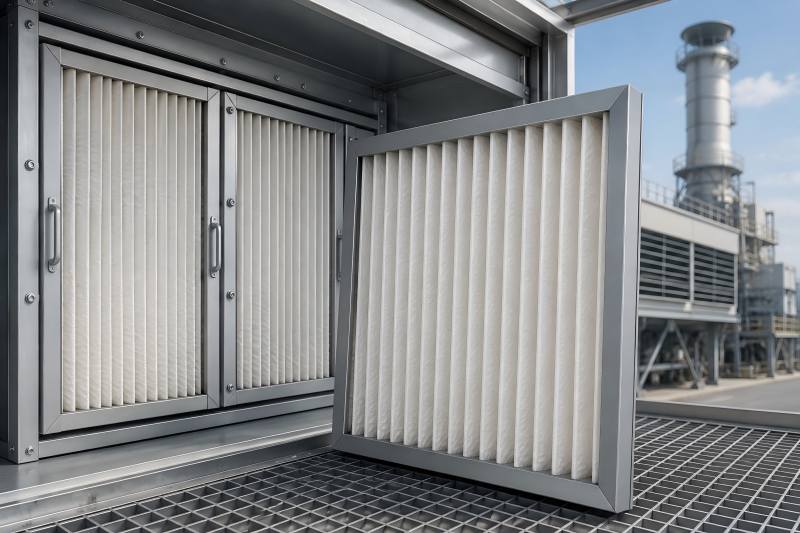
What Is a Panel Filter?
A panel filter is a flat or pleated filter element installed in a frame structure. It uses filter media supported by a rigid frame to capture dust particles as air passes through.
Panel filters are widely used in industrial ventilation systems, HVAC systems, and some gas turbine intake applications where airflow requirements and environmental conditions are moderate.
Advantages of Panel Filters
- Simple Structure
Panel filters have a relatively simple design, making them easy to install, replace, and maintain.
- Lower Initial Cost
Compared with cartridge filters, panel filters usually require lower investment, making them suitable for projects where filtration requirements are less demanding.
- Easy Replacement
The flat structure allows quick replacement without complex installation procedures.
- Suitable for Pre-filtration
Panel filters are often effective as the first filtration stage, protecting downstream high-efficiency filters from large dust loading.
Limitations of Panel Filters
Despite their advantages, panel filters have some limitations in gas turbine applications:
- Limited dust-holding capacity compared with cartridge filters.
- Smaller filtration area results in shorter service intervals.
- Higher frequency of replacement in dusty environments.
- Less suitable for extreme environments with high dust concentration or fine particles.
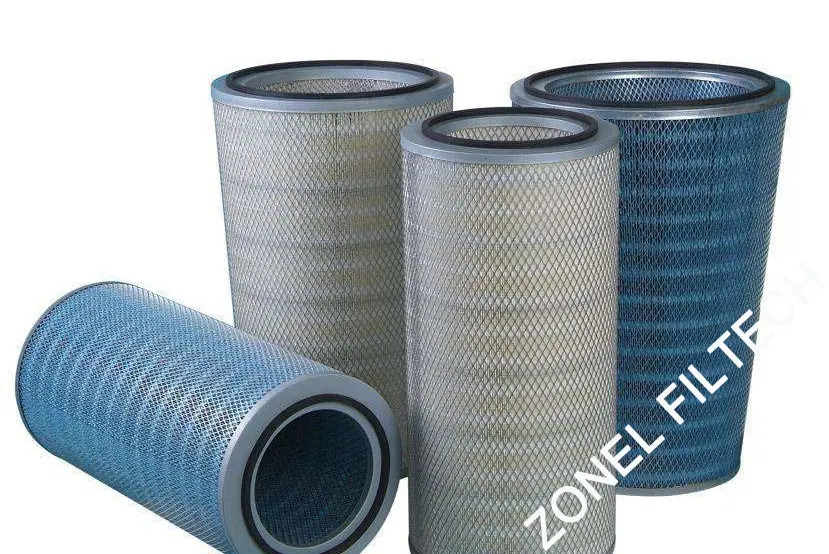
What Is a Cartridge Filter?
A cartridge filter features a cylindrical element with pleated filtration media. The pleated structure significantly increases the filtration surface area within a compact space.
In gas turbine air intake systems, cartridge filters are commonly used where high airflow, high filtration efficiency, and longer operating cycles are required.
1. Larger Filtration Area
The pleated cartridge design provides a much larger filtering surface compared with traditional flat filters.
This allows the filter to handle higher airflow while maintaining lower pressure drop.
2. Higher Dust-Holding Capacity
Cartridge filters can capture more contaminants before reaching the replacement limit, which is beneficial for gas turbines operating in dusty environments.
3. Better Filtration Efficiency
Cartridge filters can achieve higher efficiency levels for fine particles, helping reduce compressor fouling and component wear.
4. Longer Service Life
Because of the larger filtration area and higher dust capacity, cartridge filters usually require less frequent replacement.
5. Pulse Cleaning Capability
Many cartridge filters enable pulse jet cleaning. Compressed air pulses clean dust from the filter surface, extending service life and lowering maintenance requirements.
Cartridge Filter vs Panel Filter: Key Differences
| Comparison | Cartridge Filter | Panel Filter |
| Filter Structure | Cylindrical pleated element | Flat or framed element |
| Filtration Area | Large | Limited |
| Dust Capacity | Higher | Lower |
| Filtration Efficiency | Higher | Moderate |
| Service Life | Longer | Shorter |
| Maintenance Frequency | Lower | Higher |
| Initial Cost | Higher | Lower |
| Airflow Capacity | Suitable for high airflow systems | Suitable for moderate airflow |
| Cleaning Option | Pulse cleaning available | Usually replacement only |
| Best Application | Gas turbines, harsh environments | Pre-filtration, cleaner environments |
Which Filter Is Better for Gas Turbine Air Intake Systems?
The right choice varies by operating conditions and requirements. Cartridge Filters Are More Suitable When:
High Dust Concentration Exists
Gas turbines installed in deserts, mining areas, construction zones, or industrial regions often face high levels of airborne dust.
Cartridge filters provide better protection because they can capture more contaminants and maintain stable airflow.
Long Operating Time Is Required
For power plants requiring continuous operation, reducing maintenance downtime is important.
The longer service life of cartridge filters helps improve equipment availability.
High Filtration Efficiency Is Needed
Applications requiring cleaner intake air and reduced compressor fouling usually benefit from cartridge filtration.
Panel Filters Are More Suitable When:
The Environment Is Relatively Clean
For installations with low dust concentration and stable air quality, panel filters may provide sufficient protection.
Used as Pre-Filters
Panel filters are often installed upstream to capture larger particles and protect downstream cartridge filters.
Budget Is a Major Consideration
For projects with limited filtration requirements, panel filters offer a more economical solution.
Gas Turbine Air Intake Filter Selection Guide
1. Environmental Conditions
Filter selection largely depends on the operating environment and contamination level.
| Environment | Recommended Filter Solution |
| Desert area | Cartridge filter with high dust capacity |
| Coastal area | Corrosion-resistant filtration system |
| Industrial zone | High-efficiency cartridge filtration |
| Clean urban area | Panel filter or combined filtration |
2. Airflow Requirement
Gas turbines require extremely large air volumes. The filter system must provide sufficient airflow while maintaining acceptable pressure drop.
A filter with insufficient capacity can increase energy consumption and reduce turbine efficiency.
3. Maintenance Strategy
If frequent filter replacement is difficult due to remote locations or continuous operation requirements, cartridge filters are usually preferred.
4. Operating Cost
The most affordable filter is not always the most economical choice. A complete evaluation should include:
- Filter replacement frequency
- Labor cost
- Turbine efficiency loss
- Maintenance downtime
- Compressor cleaning requirements
Can Cartridge Filters and Panel Filters Be Used Together?
Yes. In many gas turbine air intake systems, a multi-stage filtration design combines both filter types.
A typical arrangement is:
Panel Pre-filter → Cartridge Fine Filter → Gas Turbine Compressor
The panel filter removes larger particles first, reducing the dust load on cartridge filters. The cartridge filter then provides high-efficiency filtration for smaller contaminants.
This combination balances:
- Filtration efficiency
- Operating cost
- Filter lifespan
- System reliability
How to Improve Gas Turbine Air Intake Filter Performance
Regardless of filter type, several factors influence filtration performance:
Proper Filter Sizing
The filter area should match the turbine airflow requirement. Undersized filters may cause excessive pressure drop.
Regular Monitoring
Monitoring pressure drop helps determine when filters need cleaning or replacement.
Correct Installation
Improper sealing or installation gaps may allow unfiltered air to enter the turbine system.
Suitable Filter Media Selection
Different environments require different filter media, such as moisture-resistant, anti-static, or high-efficiency materials.
Panel filters offer a simple and economical solution, especially for pre-filtration or relatively clean environments. However, for large gas turbines operating in dusty, industrial, or harsh environments, cartridge filters generally provide better filtration efficiency, longer service life, and improved protection.