
Filter presses are a vital part of various industrial processes, providing a crucial function in separating solids from liquids. These machines are widely used in mining, wastewater, food, and chemical industries. The heart of the filter press is the filter fabric, which plays an essential role in ensuring the efficiency and effectiveness of the separation process.
What is Filter Fabric?
Filter fabric is a specialized material designed to trap particles, allowing liquids to pass through. This fabric is used in filter presses to separate solids from liquids, making it an integral part of filtration systems. The material typically comes in the form of sheets or membranes, which are used in conjunction with pressure to extract solids from slurries, waste materials, or any other liquid-solid mixture.
The Role of Filter Fabric in a Filter Press
In a filter press, the filter fabric is placed in the chambers of the press. As the press operates, the slurry is introduced into the chambers under pressure, and the filter fabric allows the liquid to flow through while capturing the solid particles. This process produces two outputs:
- The filtrate (the liquid): This is the liquid that passes through the filter fabric.
- The cake (the solid): This is the solid material that remains trapped in the filter fabric.
The performance of the filter press is heavily dependent on the filter fabric used. A high-quality filter fabric ensures optimal filtration efficiency, maximizes throughput, and helps extend the life of the filter press.
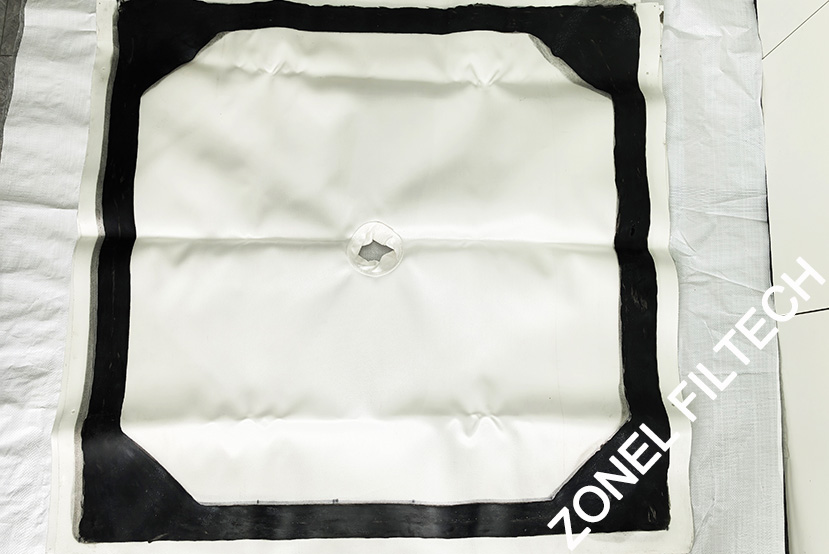
Types of Filter Fabrics
There are various types of filter fabrics, each designed for specific applications. Fabric choice depends on slurry type, particle size, and filtration needs.
Polyester (PET) Filter Fabric
Polyester is a durable, high-tensile, abrasion-resistant fabric, ideal for wastewater treatment, chemical processing, and food production.
| Pros | Cons |
| Excellent chemical resistance | Limited performance above 150 °C |
| High resistance to wear and tear | Not suitable for high-temperature processes |
| Cost-effective | |
| Good performance at moderate temperatures |
Nylon Filter Fabric
Nylon filter fabric offers high strength, flexibility, and excellent stretch resistance. It is suitable for applications involving higher mechanical loads and more demanding filtration processes.
| Pros | Cons |
| High tensile strength | Susceptible to UV degradation |
| Resists abrasion and chemicals | Limited high-temperature performance |
| Flexible for diverse filtration needs | Not suitable for prolonged heat exposure |
Polypropylene (PP) Filter Fabric
Polypropylene filter fabrics are commonly used in filtration systems dealing with acidic or basic environments. They offer strong chemical resistance for mining, pharma, and wastewater use.
| Pros | Cons |
| Excellent chemical resistance | Lower mechanical strength than other fabrics |
| Stable at high temperatures up to 90 °C | Not suitable for high-pressure filtration |
| Lightweight and easy to handle | Shorter service life in heavy-duty use |
PTFE (Teflon) Filter Fabric
PTFE is renowned for its high-temperature and chemical resistance. PTFE filter fabrics are commonly used in industries where extreme conditions are encountered, such as in the pharmaceutical and chemical industries.
| Pros | Cons |
| Withstands temperatures up to 260 °C | Higher cost than other fabrics |
| Excellent resistance to aggressive chemicals | |
| Non-stick surface reduces clogging |
Polyamide (PA) Filter Fabric
Polyamide fabrics are durable and commonly used in heavy-duty applications like the mining industry due to their wear resistance.
| Pros | Cons |
| High strength and abrasion resistance | Absorbs moisture, affecting filtration performance |
| Suitable for heavy-duty applications | |
| Good mechanical stability |
Factors to Consider When Choosing Filter Fabric
Choosing the right filter fabric is essential for optimal filter press performance, considering several factors.
Filtrate Quality
The required purity of the filtrate is a critical consideration when selecting filter fabric. Some applications, such as in the food and pharmaceutical industries, may require the highest levels of filtration, which necessitates the use of fabrics with very fine pore sizes. In contrast, applications like wastewater treatment may require fabrics with larger pores.
Chemical Compatibility
Different industrial processes involve exposure to various chemicals, and the filter fabric must be resistant to the chemicals used in the filtration process. Fabrics such as PTFE are ideal for highly corrosive environments, while polyester and polypropylene are better suited for less aggressive chemicals.
Temperature Resistance
Some industrial applications expose filter fabrics to high temperatures, which can affect the performance of the fabric. Polyester fabrics perform well at moderate temperatures, while materials like PTFE can handle extreme heat. The temperature requirements of the filtration process should be matched to the temperature tolerance of the fabric.
Mechanical Strength
The mechanical strength of filter fabric affects its durability and ability to handle filtration pressure. Fabrics with higher tensile strength, like nylon, are better suited for heavy-duty filtration tasks where high pressures are involved.
Cost
Cost is an important factor when choosing filter fabric. PTFE fabrics provide superior performance but come with a higher cost. Fabrics like polyester and polypropylene offer good performance at a lower price point, making them suitable for less demanding applications.
Key Applications of Filter Fabric
Filter fabrics are crucial in multiple industries, including mining, wastewater, and food.
Mining Industry
In mining, filter presses separate solids from slurry for dewatering. Filter fabrics in these applications must be durable and capable of handling large volumes of material with high solid content.
Wastewater Treatment
Filter presses in wastewater treatment dewater sludge, requiring the right fabric for efficient solid-liquid separation. Polyester and polypropylene are commonly used for this application due to their resistance to the chemicals found in wastewater.
Food and Beverage Industry
Filter fabrics separate solids from liquids in juice and beer production processes. The fabric must meet stringent hygiene standards and be capable of handling various types of liquid with varying viscosities.
Chemical Processing
Filter fabrics used in chemical processing must be resistant to a wide range of chemicals and solvents. PTFE is preferred for its resistance to harsh chemicals without degradation.
Pharmaceutical Industry
In pharmaceuticals, filter presses produce high-purity substances. The filter fabric must be capable of meeting strict regulatory standards and providing high-quality filtrate with minimal contamination.
Comparison of Filter Fabrics
| Fabric Type | Temperature Resistance | Chemical Resistance | Mechanical Strength | Cost | Common Applications |
| Polyester | Moderate (up to 150°C) | Moderate | High | Low | Wastewater treatment, food |
| Nylon | Moderate (up to 180°C) | Good | Very High | Medium | Mining, chemical processing |
| Polypropylene | Moderate (up to 90°C) | Excellent | Moderate | Low | Wastewater, chemical processing |
| PTFE | High (up to 260°C) | Excellent | High | High | Chemical processing, high-temperature applications |
| Polyamide | Moderate (up to 120°C) | Good | Very High | Medium | Heavy-duty applications |
Maintenance of Filter Fabrics
Proper maintenance ensures filter fabrics remain efficient, preventing clogging, buildup, and performance degradation over time. Regular cleaning, monitoring, and replacement of damaged fabrics are essential to maintain the performance of the filter press.
Cleaning Filter Fabrics
Filter fabrics can be cleaned by various methods depending on the type of fabric and the nature of the material being filtered. Some common cleaning techniques include:
Water flushing: Running water through the fabric to remove particles.
Chemical cleaning: Employing specialized cleaning solutions to dissolve and wash away accumulated solids within the fabric.
Ultrasonic cleaning: Using ultrasonic waves to loosen particles and contaminants trapped in the filter material.
Replacing Filter Fabrics
Over time, filter fabrics degrade under high pressure and heat. Routine inspections help detect wear, and severely damaged or clogged fabrics should be replaced to ensure efficient filtration.
Conclusion
Filter fabric is an essential component of a filter press, playing a vital role in ensuring the efficient separation of solids from liquids. The choice of filter fabric depends on various factors, including chemical resistance, temperature tolerance, mechanical strength, and cost. By selecting the right filter fabric for a specific application, industries can maximize the efficiency of their filtration processes, reduce operational costs, and ensure the long-term performance of their filter presses.