
Selecting the right filter fabric for a filter press system is far more critical than many operators initially realize. While filter presses themselves are robust and relatively standardized pieces of equipment, the filter fabric—also known as filter cloth—is the component that directly determines filtration efficiency, cake quality, cycle time, and operating costs. A poor fabric choice can negate the advantages of even the most advanced filter press, leading to frequent downtime, excessive moisture in filter cakes, high maintenance costs, and reduced throughput.
Mistake 1: Choosing Filter Fabric Based on Price Alone
One of the most costly mistakes is choosing filter fabric by price alone, as low upfront cost often increases long-term operating expenses.
Low-cost filter fabrics typically use inferior yarns, inconsistent weaving techniques, or inadequate finishing processes. These shortcomings may not be obvious during initial installation, but they quickly become apparent during operation. Problems such as premature wear, rapid blinding, poor cake release, and reduced filtration accuracy emerge far sooner than expected.
A cheaper fabric that lasts three months instead of twelve months is not economical when downtime, labor, and disposal costs are factored in. In addition, inconsistent filtration performance can disrupt downstream processes, compounding the financial impact.
Key takeaway: Total cost of ownership—not purchase price—should guide filter fabric selection.
Mistake 2: Ignoring Slurry Characteristics
Filter fabric must precisely match the slurry’s physical and chemical properties. A common mistake is selecting fabric based on previous experience or generic recommendations without reassessing the actual slurry conditions.
Critical slurry parameters include:
- Particle size distribution
- Solids concentration
- Chemical composition
- Temperature
- pH level
- Abrasiveness
For example, a fabric that performs well with coarse mineral slurry may fail quickly when used for fine chemical sludge. Fine particles can penetrate fabric pores, causing blinding and severely reducing filtration efficiency.
Slurry Characteristics and Fabric Selection Considerations
| Slurry Characteristic | Impact on Fabric Selection |
| Fine particle size | Requires smaller pore size and tighter weave |
| High abrasiveness | Needs high-tenacity fibers and durable weave |
| Strong acidity/alkalinity | Demands chemically resistant materials |
| High temperature | Limits choice of polymer materials |
| High solids content | Requires strong fabric structure to resist deformation |
Failing to analyze slurry properties often results in fabric mismatch, shortened service life, and unstable filtration cycles.
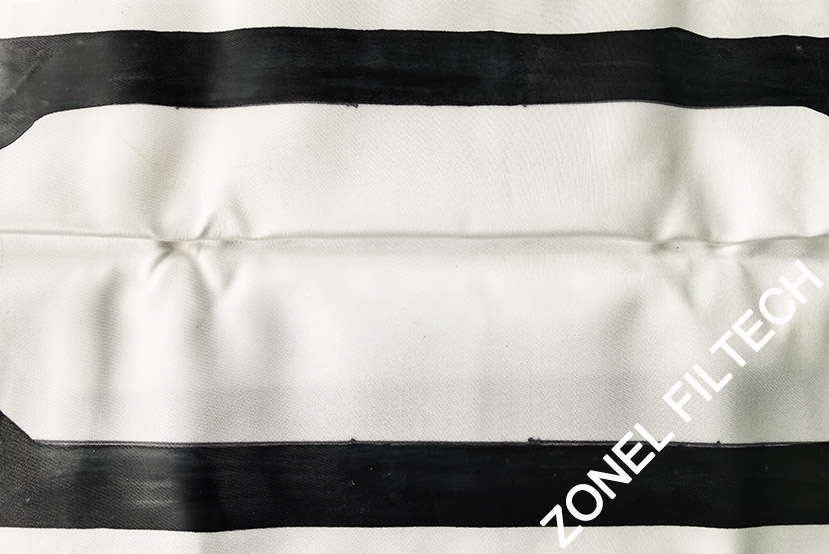
Mistake 3: Selecting Incorrect Pore Size
Pore size is one of the most misunderstood parameters in filter fabric selection. Many users assume that smaller pores always lead to better filtration, but this assumption is flawed.
While smaller pore sizes can improve particle retention, they also increase flow resistance. Excessively fine pores may:
- Increase filtration cycle time
- Raise operating pressure
- Accelerate fabric blinding
- Reduce cake permeability
Conversely, overly large pores allow solids to pass through, resulting in cloudy filtrate and poor separation efficiency.
The optimal pore size balances filtration accuracy with throughput and cake permeability. This balance varies depending on slurry characteristics and process requirements.
Key takeaway: The “smallest pore” is rarely the “best pore.”
Mistake 4: Overlooking Fabric Material Compatibility
Filter fabrics use different synthetic fibers with unique chemical, thermal, and mechanical properties. A frequent mistake is selecting fabric material without considering chemical compatibility with the process medium.
Common filter fabric materials include:
- Polypropylene
- Polyester
- Nylon
- Specialty blends
Using a fabric material that is incompatible with the process environment can lead to rapid degradation, fiber embrittlement, or loss of mechanical strength. For instance, certain polymers perform poorly in high-temperature alkaline environments, while others degrade in strong acids.
Chemical attack often occurs gradually, making it difficult to trace performance issues back to material incompatibility.
Key takeaway: Chemical resistance is just as important as mechanical strength.
Mistake 5: Ignoring Weave Structure and Fabric Construction
Many buyers focus exclusively on fabric material and pore size, overlooking weave structure and fabric construction. However, these factors significantly influence filtration behavior.
Woven fabrics may feature:
- Plain weave
- Twill weave
- Satin weave
- Multi-layer structures
Each weave type affects:
- Surface smoothness
- Cake release behavior
- Resistance to blinding
- Mechanical stability under pressure
For example, a fabric with excellent particle retention may still perform poorly if its surface texture traps cake material, causing difficult discharge and manual cleaning requirements.
Fabric thickness also matters. Overly thin fabrics may deform under pressure, while excessively thick fabrics may restrict filtrate flow.
Mistake 6: Failing to Consider Cake Release Performance
Poor cake release is one of the most common complaints among filter press operators, yet it is often incorrectly attributed to press design or operating pressure rather than fabric selection.
Cake release depends on:
- Fabric surface finish
- Yarn type
- Weave pattern
Interaction between solids and fabric surface
If the cake adheres strongly to the fabric, operators must resort to manual scraping or high-pressure washing, increasing labor costs and accelerating fabric wear.
In many cases, switching to a fabric with optimized surface treatment or different weave structure dramatically improves cake discharge without any changes to the filter press itself.
Mistake 7: Underestimating Operating Pressure and Mechanical Stress
Filter fabrics operate under repeated cycles of compression, pressure release, and mechanical movement. Selecting a fabric without sufficient mechanical strength for the operating pressure is a costly mistake.
High-pressure filter presses require fabrics with:
- High tensile strength
- Strong seam construction
- Dimensional stability
Inadequate fabric strength can result in seam failure, fabric stretching, or uneven wear, leading to leaks and unplanned shutdowns.
Mechanical stress is particularly severe in applications involving:
- Large filter plates
- High solids loading
- Frequent cycle repetition
Ignoring these stresses shortens fabric lifespan and increases replacement frequency.
Mistake 8: Neglecting Fabric Cleaning and Maintenance Requirements
Some filter fabrics require specific cleaning methods to maintain performance. A common oversight is selecting a fabric without considering whether the facility can properly clean and maintain it.
For example:
Certain fabrics respond well to backwashing
Others require chemical cleaning
Some tolerate high-pressure washing better than others
Using aggressive cleaning methods on incompatible fabrics accelerates wear and damages fiber structure. Over time, cleaning-related degradation reduces filtration efficiency more than the original contamination.
Table 2: Fabric Type vs Cleaning Method Compatibility
| Fabric Type | High-Pressure Washing | Chemical Cleaning | Backwashing |
| Polypropylene | Good | Moderate | Good |
| Polyester | Moderate | Good | Limited |
| Nylon | Limited | Moderate | Limited |
Selecting a fabric aligned with existing maintenance practices prevents avoidable damage and downtime.
Mistake 9: Assuming One Fabric Fits All Applications
Facilities operating multiple filtration processes sometimes attempt to standardize on a single fabric type to simplify procurement and inventory. While standardization has benefits, assuming one fabric suits all applications is often unrealistic.
Different slurries place different demands on the fabric. A fabric that works well for municipal sludge may be entirely unsuitable for chemical sludge or mineral concentrates.
Over-standardization sacrifices performance in favor of convenience, often resulting in higher operating costs and inconsistent filtration results.
Mistake 10: Not Consulting Filtration Specialists or Testing Samples
Perhaps the most avoidable mistake is selecting filter fabric without expert input or pilot testing. Filtration is a complex interaction between fabric, slurry, pressure, and operating conditions.
Skipping fabric trials or laboratory testing leads to guesswork-based decisions. In contrast, small-scale testing can reveal:
- Actual filtration rate
- Cake moisture content
- Tendency toward blinding
- Cake release behavior
Many long-term filtration problems originate from initial assumptions that were never validated.
Key takeaway: Testing saves time, money, and operational frustration.
Conclusion
Selecting filter fabric for filter press systems is not a simple procurement decision—it is a technical choice that directly affects process efficiency, operating costs, and equipment reliability. The most common mistakes arise from oversimplification, cost-driven decisions, and insufficient understanding of process conditions.
By avoiding price-only selection, matching fabric properties to slurry characteristics, considering material compatibility, and accounting for mechanical stress and maintenance requirements, operators can dramatically improve filtration performance. Most importantly, engaging filtration specialists and validating fabric performance through testing ensures that the selected fabric delivers consistent, long-term results.
In filtration, the right fabric does more than separate solids from liquids—it stabilizes operations, protects equipment, and maximizes return on investment.