
In industrial filtration systems, both filter bags and cartridge filters play essential roles in removing contaminants from liquids and gases. While they serve a similar purpose, their design, performance, cost, and application scenarios differ significantly. Understanding these differences helps engineers and plant managers choose the most efficient and cost-effective solution for their specific needs.
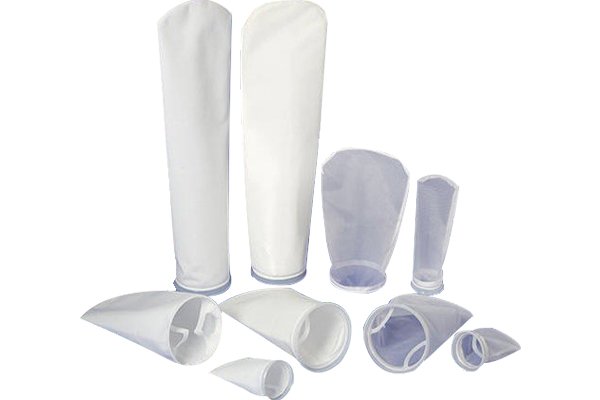
What Are Filter Bags?
Filter bags are a type of depth filtration media typically made from woven or felted fabrics such as polyester, polypropylene, or PTFE. They are installed inside a bag filter housing and are designed to capture particles as fluid passes through the material.
Key Features of Filter Bags
- Simple structure: Cylindrical or envelope-shaped bags
- Large dirt-holding capacity: Ideal for high-contamination environments
- Wide material compatibility: Suitable for various chemicals and temperatures
- Micron ratings: Typically range from 1 to 200 microns
Common Materials Used
- Polyester (PE)
- Polypropylene (PP)
- Nylon (NMO)
- PTFE (Teflon)
Typical Applications
Filter bags are commonly applied across industries that require efficient handling of high fluid volumes.
- Water treatment plants
- Food and beverage processing
- Chemical manufacturing
- Paints and coatings
- Oil and gas filtration
| Pros | Cons |
| High flow rate capability | Lower filtration precision compared to cartridges |
| Low initial investment | Potential for particle bypass if not properly sealed |
| Easy installation and replacement | Not ideal for ultra-fine filtration |
| Excellent for bulk particle removal |
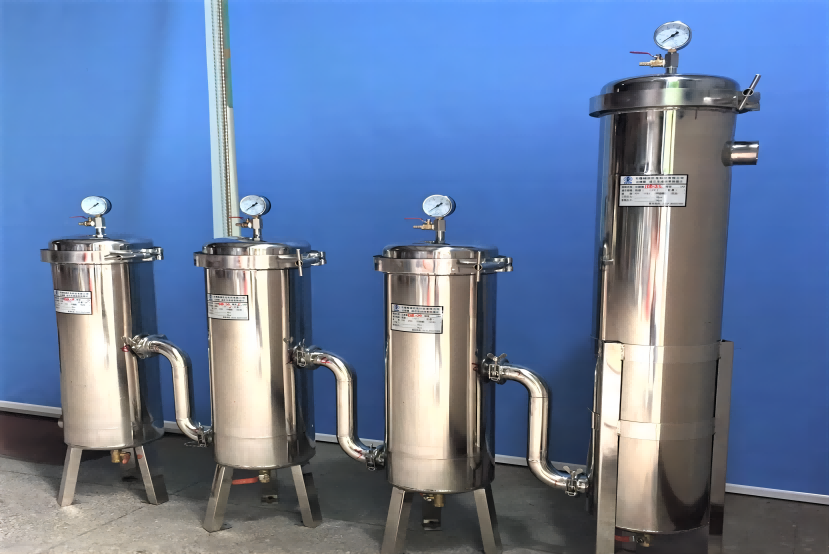
What Are Cartridge Filters?
Cartridge filters are cylindrical filter elements designed for high-precision filtration. They are typically made from pleated membranes or depth media and are installed inside a cartridge housing.
Key Features of Cartridge Filters
- High filtration accuracy: Can filter down to sub-micron levels
- Pleated design: Increases surface area and efficiency
- Compact structure: Suitable for space-constrained systems
- Replaceable elements: Easy maintenance
Common Materials Used
- Polypropylene (PP melt-blown)
- Glass fiber
- PTFE membrane
- PES (Polyethersulfone)
- Nylon membrane
Typical Applications
Cartridge filters are used where precision and cleanliness are critical:
- Pharmaceutical production
- Semiconductor manufacturing
- Beverage polishing filtration
- Fine chemical processing
- Laboratory filtration systems
| Pros | Cons |
| High filtration efficiency (often >99%) | Higher cost per unit |
| Consistent and reliable performance | Lower dirt-holding capacity compared to filter bags |
| Suitable for sterile and critical processes | More frequent replacement in high-load conditions |
| Minimal risk of bypass |
Structural Differences Between Filter Bags and Cartridge Filters
The structural differences between these two filtration systems play a crucial role in determining their performance and suitability for various applications.
Structural Comparison
| Feature | Filter Bags | Cartridge Filters |
| Shape | Cylindrical or envelope | Cylindrical rigid element |
| Filtration Type | Depth filtration | Surface or depth filtration |
| Surface Area | Moderate | High (due to pleating) |
| Installation | Basket-supported | Core-supported |
| Sealing Mechanism | Ring or flange | O-ring or gasket |
| Replacement Method | Replace entire bag | Replace cartridge element |
Key Insights
Filter bags trap particles throughout the media thickness (depth filtration), while cartridge filters typically retain contaminants on the surface, especially in membrane-based designs.
Filtration Efficiency and Precision
One of the most critical differences lies in filtration accuracy.
Filter Bags
- Typically used for coarse to medium filtration
- Micron rating: 1–200 µm
- Efficiency depends on material and construction
- Suitable for pre-filtration stages
Cartridge Filters
- Designed for fine and ultra-fine filtration
- Micron rating: 0.1–50 µm (or even finer)
- High and consistent removal efficiency
- Ideal for final or polishing filtration
Filtration Performance Comparison
| Parameter | Filter Bags | Cartridge Filters |
| Micron Rating Range | 1 – 200 µm | 0.1 – 50 µm |
| Filtration Efficiency | Moderate | High (>99%) |
| Particle Retention | Depth-based | Surface/membrane-based |
| Consistency | Variable | Highly consistent |
| Application Stage | Pre-filtration | Final filtration |
Flow Rate and Throughput
Filter Bags
Filter bags are engineered to support high flow capacity, allowing large volumes of fluid to pass through efficiently while maintaining a low pressure drop. Their open structure allows fluid to pass through easily, making them ideal for:
- Bulk filtration
- High-viscosity fluids
- Systems requiring fast processing
Cartridge Filters
Cartridge filters, while efficient, typically have lower flow rates compared to bags due to tighter filtration media. However, their pleated design compensates by increasing surface area.
Comparison Summary
- Filter bags = High flow, lower precision
- Cartridge filters = Lower flow, higher precision
Dirt-Holding Capacity
Filter Bags
One of the key benefits of filter bags is their ability to retain a large volume of contaminants. They can retain large amounts of contaminants before requiring replacement.
This makes them ideal for:
- Dirty or high-solid-content fluids
- Initial filtration stages
Cartridge Filters
Cartridge filters have limited dirt capacity due to their finer structure. They clog faster when exposed to heavy contamination loads.
Practical Implication
In systems with high particulate loads, using cartridge filters alone can lead to frequent replacements and higher operational costs. Therefore, filter bags are often used as a pre-filtration step.
Cost Considerations
Cost is a major factor when selecting a filtration system.
Initial Cost
- Filter bags: Lower upfront cost
- Cartridge filters: Higher initial investment
Operating Cost
- Filter bags: Lower replacement cost, longer service life in dirty conditions
- Cartridge filters: Higher replacement frequency in certain applications
Total Cost of Ownership
While cartridge filters are more expensive, they may reduce costs in applications requiring high purity, as they prevent contamination-related losses.
Maintenance and Replacement
Filter Bags
- Easy to install and remove
- Less frequent replacement in high-load systems
- Minimal technical expertise required
Cartridge Filters
- Quick replacement but more frequent changes
- Require proper handling to maintain integrity
- Often used in clean environments
Application Scenarios: When to Use Each?
When to Choose Filter Bags
Filter bags are the better choice when:
- Filtration precision is not extremely critical
- Fluid contains a high level of contaminants
- High flow rates are required
- Cost efficiency is a priority
Examples:
- Wastewater treatment
- Bulk chemical filtration
- Paint and ink filtration
When to Choose Cartridge Filters
Cartridge filters are ideal when:
- High precision filtration is required
- Final product purity is critical
- Low particulate load is present
- Regulatory standards must be met
Examples:
- Pharmaceutical filtration
- Food and beverage polishing
- Electronics manufacturing
Hybrid Filtration Systems
In many applications, combining both filtration systems delivers better overall performance and efficiency.
Typical Setup
- Pre-filtration: Filter bags remove large particles
- Fine filtration: Cartridge filters polish the fluid
Benefits of Hybrid Systems
- Extended cartridge life
- Improved overall efficiency
- Reduced operating costs
- Enhanced product quality
Environmental and Sustainability Considerations
Filter Bags
- Usually disposable
- Some reusable options available
- Lower material complexity
Cartridge Filters
- Some are cleanable and reusable
- Others are single-use (especially in sterile applications)
- More complex materials may impact recyclability
Sustainability Insight
Selecting reusable or longer-life filtration elements can significantly reduce environmental impact.
Both filter bags and cartridge filters have unique benefits and drawbacks, which determine their suitability for different filtration tasks. Filter bags excel in handling high flow rates and heavy contamination loads at a lower cost, while cartridge filters provide superior precision and consistency for critical applications.
Instead of treating them as competing options, it’s more practical to see them as complementary solutions that work best when used together. By integrating both into a well-designed filtration system, industries can achieve optimal performance, cost efficiency, and product quality.