
Product loss during a liquid filter changeout is rarely confined to the liquid left inside the vessel. Some remains in the element, some sits in connecting pipes, and some is discarded while the line returns to an acceptable operating condition. Reducing that loss starts by measuring these streams separately. A recovery step that saves liquid but contaminates the next batch is not a yield improvement.
The practical objective is to recover more usable product while maintaining separation between dirty liquid, accepted filtrate, cleaning fluid, and waste. That usually requires a combination of better drainage, suitable equipment geometry, a consistent changeout sequence, and fewer unnecessary element replacements. No single accessory addresses every source of loss.
Measure one complete changeout before changing equipment
Choose a representative product and observe the full event, from the decision to stop filtration to the point when the line returns to accepted production. Record the operating conditions, reason for changing the element, and volume processed since the previous change. Keep the product grade and batch identity with the record.
Identify every stream leaving the system. These may include a drain to a recovery tank, liquid removed with the used element, a cleaning discharge, samples, and startup liquid diverted from production. A single waste container can hide several different losses. Separate collection makes it possible to see which part of the changeout deserves attention first.
Where weighing is practical, use suitable containers with known empty weights. Convert mass to volume only with an appropriate density for the liquid and temperature. For changing formulations, reporting mass may be more reliable than converting every result with the same assumed density. The measurement method should remain consistent across the trial.
Allow for material left in the measuring equipment and for any liquid entering during the observation. If rinse fluid is added, its mass is not recovered product. If a product-rich stream is blended back into another batch, record the amount accepted by that batch and the resulting quality decision. A recovery tank level by itself does not establish the amount of saleable material saved.
Use a small material balance
Start with product present in the isolated equipment. Account for accepted recovered product, product remaining in the spent element, product sent to waste, and any unexplained difference. The balance need not be elaborate, but its boundaries must be clear. Include the isolated pipes if they are drained during every changeout.
For an illustrative volume balance, assume a measured changeout contains 20 liters of product. If 12 liters are collected and accepted for reuse, 5 liters leave with the wet element, and 3 liters go to waste, the accounted unrecovered product is 8 liters. These are hypothetical values, not a claimed result for a particular housing. For the plant calculation, replace each assumed volume with the corresponding quantity recorded during an actual changeout.
Repeat the observation across comparable changeouts. A single unusually dirty batch can distort the result. Record both the average and the range so that an improvement is not declared on the strength of one favorable event. Consistency matters when operators must follow the method on every shift.
Distinguish recoverable liquid from material that should leave the process
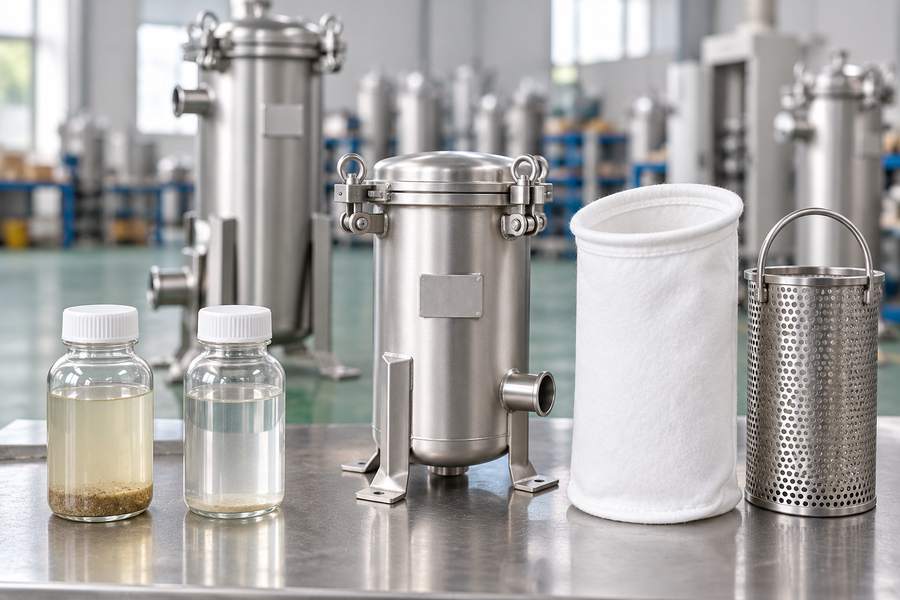
Liquid on the upstream side of a filter may contain the contaminants the filter was installed to remove. Recovering it does not make it clean. Decide whether it can return to an upstream tank for filtration, whether it needs separate treatment, or whether the product specification requires disposal.
Keep accepted filtrate separate from upstream drainage. Combining both streams in a common collection vessel can turn an otherwise usable recovery stream into material that needs reprocessing. The piping and operating procedure should make the destination clear, especially where operators handle several grades or colors.
Material held in a spent bag or cartridge is another distinct stream. It can contain concentrated solids, degraded product, or residues from long residence time. Draining it for a controlled period may recover useful liquid in some applications, but squeezing or manipulating the element can release contaminants and create handling problems. Any such method needs a defined quality basis and an approved procedure.
Set acceptance criteria before the trial. Depending on the product, the decision may depend on particle content, concentration, color, moisture, microbial condition, or another relevant property. The quality team should define the destination of the recovered material. Operators should not have to decide whether a cloudy drain sample looks clean enough during a busy changeover.
Reduce the volume that becomes trapped
Look at the installed equipment, not only the vessel drawing. A low point in the connecting pipe, an elevated drain outlet, or a long branch can retain product after the main housing appears empty. Walk the line with the drawing and mark the sections isolated and drained during maintenance.
Drainability depends on geometry and the properties of the liquid. A viscous product may leave slowly, and a nominal low-point drain can be ineffective if its route rises before reaching the collection vessel. Examine the actual route and the approved venting arrangement. Trapped gas or liquid can complicate drainage, but opening an arbitrary fitting is not an acceptable substitute for a designed vent.
When choosing a liquid filter housing, ask about the working hold-up of the proposed arrangement, the position of its drain, and access for cleaning. Catalog vessel volume is not necessarily the amount lost at each change. The element, internal components, drain method, and attached pipes all affect the result.
A smaller housing can reduce inventory, but only if it still meets the filtration duty. If reduced area causes twice as many changeouts, a lower loss per event may be offset by more events. Compare unrecovered product per batch or per unit of accepted output as well as liters lost at each stop.
Consider displacement devices only as an engineered option
Some bag filtration arrangements use a compatible displacement device to occupy space that would otherwise hold liquid. This can reduce the liquid inventory associated with the element. It is an equipment option to evaluate with the housing supplier, not a reason to place an improvised object inside the vessel.
Check the device’s compatibility, support, pressure and temperature suitability, cleanability, and effect on flow. Confirm that it does not interfere with bag seating or removal. Where contamination control is strict, its surfaces and retention points need the same attention as the rest of the wetted assembly.
Make drainage repeatable without sacrificing product quality
Specify the destination, sequence, and stopping condition for drainage. An instruction to drain thoroughly gives operators no measurable basis for deciding when to finish. The appropriate endpoint may be a validated drain time, a flow condition, or a measured remaining quantity, depending on the installation and product.
Compare a practical range of drain times under matched conditions. The first part of the drain may recover most of the available liquid, while a long final wait recovers very little. Measure the incremental recovery and its quality. The useful endpoint is the point justified by production and quality requirements, not necessarily the last visible drop.
Do not introduce compressed air, nitrogen, or another displacement medium unless the system and process have been designed and approved for it. Pressure-assisted recovery can affect product chemistry, create aerosols, or introduce a different operating hazard. Equipment limits and the approved isolation method still apply. A recovery objective does not justify improvising a pressure source.
If a compatible liquid is used to displace product, account for the transition mixture. It may be recoverable into a suitable destination, but it is not automatically on-spec product. Define the boundary using a relevant measurement instead of a fixed visual assumption. Keep the displaced product and the diluted transition stream distinguishable in the material balance.
Reduce changeout frequency for the right reason
Every avoided unnecessary changeout can avoid its associated drain, cleaning, and startup losses. First establish why operators are replacing the element. Possible reasons include a differential pressure limit, a batch boundary, a hygiene requirement, a quality failure, or a fixed schedule. Those reasons are not interchangeable.
If elements are replaced by the clock while their performance varies widely, review whether the schedule still reflects the process. Any revised interval must remain within the approved quality and operating requirements. A low pressure drop does not prove that an element is retaining particles correctly or remains suitable for continued service.
Choose filter bags suited to the contaminant and liquid rather than selecting only the lowest purchase price. A change in construction may alter capacity, clean resistance, retained liquid, and the way the bag drains. Evaluate the entire changeout cycle, including the quality of the recovered stream.
More filtration area may extend the run, but a larger assembly can hold more product. Additional stages may protect a final element while creating another vessel to drain. The best arrangement is the one with the best measured outcome over the production period, after accounting for every element change and its associated inventory.
Separate production continuity from product recovery
A duplex arrangement can keep a process operating while one housing is serviced, provided the remaining path can carry the required duty and the changeover is correctly engineered. That does not mean the offline housing drains without loss. Its retained product still needs a defined recovery route.
Likewise, a bypass that allows unfiltered liquid downstream is not equivalent to continuous filtration. If the process requires all product to pass through a qualified element, continuity has to be achieved with an appropriate filtration path or an approved production interruption. Keep this distinction clear when comparing layout options.
During a changeover, avoid mixing product from an old batch into a new one through common drains or recovery lines. Where a standby housing remains filled, consider the consequences of that residence time. The recovery procedure and the production sequence must be designed together, especially for products that settle, cure, oxidize, or have hygiene limits.
Write a changeout procedure that operators can follow
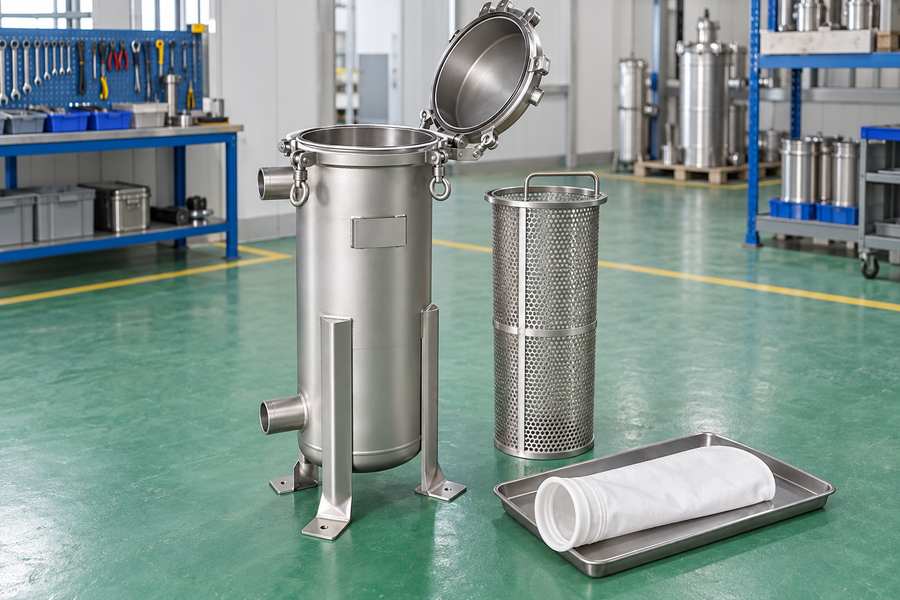
A useful procedure identifies the equipment and the material destination at each step. It should reference the plant’s isolation and depressurization requirements, describe the approved drainage arrangement, and state how the spent element is handled. Keep recovery instructions specific enough that two shifts can reproduce the same result.
- Before stopping: Confirm the reason for replacement, prepare the correct element and seals, and make the approved recovery destination available.
- During isolation and drainage: Follow the equipment procedure, segregate product from cleaning streams, and record the recovered quantity.
- During replacement: Protect clean components, inspect the seating and support, and prevent debris from entering the filtrate side.
- During restart: Fill and vent as specified, verify the assembly, and direct startup liquid according to the quality plan.
- After release: Record the accepted recovery, waste, startup loss, and any deviation that affected the result.
Stage tools and replacement parts before the shutdown where practical. Searching for the right gasket while a drained system stands open increases handling and can encourage shortcuts. A prepared maintenance area also helps keep recovered product and waste containers correctly identified.
Inspect recurring sources of spillage. A container that is difficult to position, a drain that discharges too close to a support leg, or a wet element that has no suitable transfer tray can undermine an otherwise sound procedure. Small physical changes can make the approved method easier to follow consistently.
Verify the improvement across the complete batch
Track unrecovered product per changeout, changeouts per batch, accepted recovery, startup diversion, and final product quality. Record maintenance time too, but do not let a shorter stop conceal greater product loss. Compare equivalent products and duties before attributing a difference to the new method.
Investigate unexplained differences in the material balance. A large apparent improvement may reflect a different collection boundary or unmeasured dilution. Use the same weighing method and recovery acceptance criteria throughout the comparison. Document changes in temperature because they can affect both drainage and density.
Once the improvement is repeatable, update the procedure and train the operators who perform the work. Keep a simple check in the production record so that the gains do not depend on one experienced person being present. Revisit the method when a formulation, element, housing, or cleaning sequence changes.
The most useful recovery project begins with a clear account of where product goes. Reduce trapped inventory where it is practical, recover only material with an approved destination, and avoid unnecessary changes without weakening filtration. That approach turns a vague goal of wasting less liquid into a repeatable improvement in accepted production yield.