
Understanding the Role of Dust Filter Media
Selecting dust filter media requires a balance between dust characteristics, operating conditions, filtration performance, and maintenance requirements. Polyester remains a practical choice for many general applications, while PTFE, polypropylene, aramid, and other advanced materials provide solutions for more demanding environments.
The correct filter media should not only capture dust effectively but also maintain stable airflow, reduce cleaning frequency, and extend equipment service life. A proper selection process at the beginning can prevent many performance problems after installation.
| Dust Property | Why It Matters for Filter Selection |
| Particle size | Determines filtration efficiency and dust loading behavior |
| Dust concentration | Affects filter surface loading and cleaning frequency |
| Moisture content | Influences dust adhesion and filter clogging |
| Temperature | Limits suitable filter materials |
| Chemical composition | Determines corrosion and chemical resistance |
| Dust shape | Affects cake formation and cleaning performance |
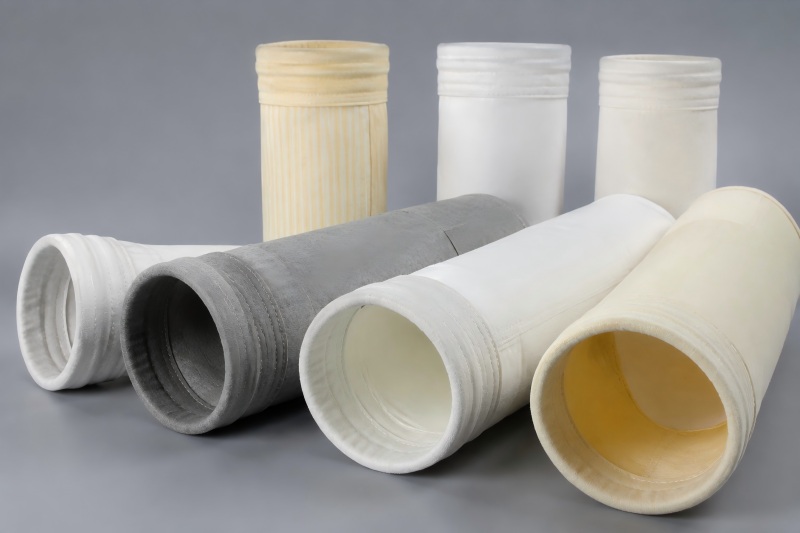
Match Filter Media Type with Dust Characteristics
Dust filter media is usually made from different synthetic fibers, natural fibers, or composite materials. Each material offers different benefits and trade-offs.
The best choice depends on whether the priority is filtration efficiency, temperature resistance, moisture tolerance, or operating cost.
Polyester Filter Media for General Industrial Dust
Polyester is one of the most widely used filter materials because it provides a balanced combination of strength, cost, and filtration performance.
It is suitable for many dry dust applications, including woodworking, plastic processing, powder handling, and general manufacturing.
Typical characteristics:
| Parameter | Typical Range |
| Operating temperature | About 120–150°C |
| Moisture resistance | Good |
| Mechanical strength | High |
| Cost level | Low to medium |
Polyester filter media is a practical choice when dust conditions are stable and there are no extreme temperature or chemical requirements.
Common applications include:
- Wood dust collection
- Plastic powder recovery
- General workshop dust extraction
- Packaging and material handling systems
Polypropylene Filter Media for Moist or Chemical Dust
Polypropylene offers strong moisture and chemical resistance, making it suitable for harsher environments than polyester.
It is often selected for chemical processing, fertilizer production, and applications involving corrosive dust.
Advantages include:
- Strong resistance to acids and alkalis
- Low moisture absorption
- Good performance in humid environments
However, polypropylene has a lower temperature limit compared with some advanced filter materials. It should not be selected for high-temperature applications without additional protection.
PTFE Filter Media for Fine and Difficult Dust
PTFE-coated or PTFE membrane filter media is designed for applications requiring high filtration efficiency and easy dust release.
The smooth surface prevents fine particles from deeply penetrating the filter structure. This helps reduce pressure buildup and improves cleaning performance.
| Feature | Benefit |
| Fine particle capture | Better control of small dust particles |
| Surface filtration | Easier dust cake removal |
| Chemical resistance | Suitable for aggressive environments |
| Low adhesion | Reduces filter blockage |
PTFE media is often used for pharmaceutical powders, fine chemicals, battery materials, and applications with strict emission requirements.
Higher upfront costs can be offset by extended filter life and reduced maintenance needs.
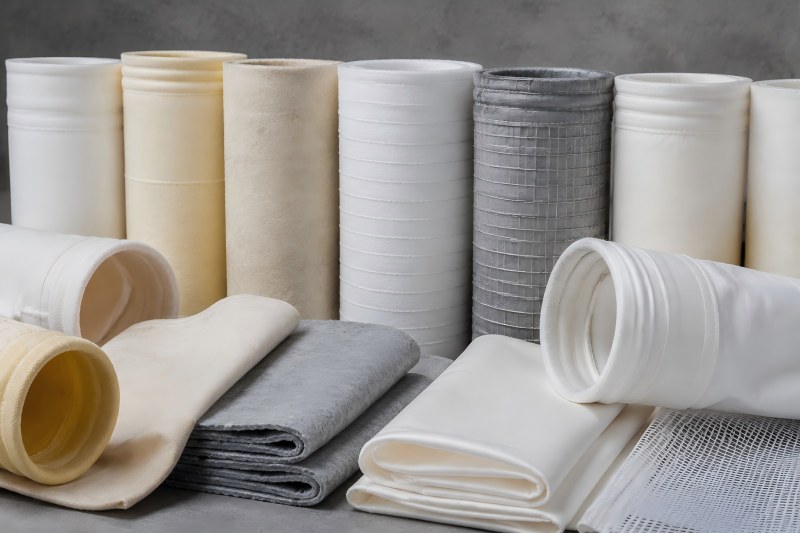
Select Filter Media According to Dust Type
Different dust materials create different filtration challenges. The same filter cannot provide optimal performance for every application.
Wood Dust and Fibrous Dust
Wood dust usually contains lightweight particles with irregular shapes. These particles can form a thick filter cake and may block the surface if the media is not easy to clean.
Recommended filter characteristics:
- High air permeability
- Good dust release performance
- Strong mechanical strength
Polyester needle felt is commonly suitable for woodworking applications because it handles frequent cleaning cycles and changing dust loads.
For fine wood dust, surface-treated polyester or membrane-coated media can improve filtration stability.
| Dust Type | Recommended Media | Key Reason |
| Sawdust | Polyester | Durable and economical |
| Fine wood powder | PTFE-coated polyester | Better fine particle control |
| Resin-containing wood dust | Anti-static polyester | Reduces dust adhesion |
Metal Dust and Grinding Particles
Metal dust from cutting, grinding, and polishing processes is usually abrasive and may contain sharp particles.
The filter media must withstand mechanical impact and repeated cleaning.
Important considerations:
- Abrasion resistance
- Strong fiber structure
- Stable filtration under high dust loading
Polyester and aramid-based filter materials are commonly considered depending on temperature and process conditions.
For aluminum or magnesium dust, static control is especially important because accumulated dust may create safety risks.
Cement, Mineral, and Construction Dust
Mineral dust usually contains large amounts of fine particles that can quickly increase filter resistance.
The main challenge is maintaining airflow while preventing excessive dust penetration.
Suitable filter requirements:
- High filtration efficiency
- Good cleaning ability
- Resistance to alkaline dust
Common choices include:
| Dust Material | Suitable Filter Media |
| Cement dust | Polyester needle felt |
| Limestone dust | Polyester or PTFE-coated polyester |
| Ceramic dust | High-strength synthetic media |
For continuous operation, surface filtration materials are often preferred because they prevent deep dust embedding.
Food and Pharmaceutical Dust
Food and pharmaceutical industries usually require cleaner filtration conditions because product contamination and hygiene are important.
Filter media selection should consider:
- Food-contact compatibility
- Easy cleaning
- Low particle shedding
- Chemical resistance during cleaning
Common materials include polyester, polypropylene, and PTFE membrane media.
For very fine powders such as milk powder, starch, or pharmaceutical ingredients, PTFE-coated filters can help maintain stable airflow and reduce product loss.
High-Temperature Dust Applications
Temperature is one of the most important limits when selecting filter media.
Standard polyester filters may lose strength when exposed to excessive heat. High-temperature applications require specialized materials.
| Filter Material | Approximate Temperature Capability |
| Polyester | 120–150°C |
| Polypropylene | Around 90–100°C |
| Aramid | 180–220°C |
| PPS | 190–220°C |
| PTFE fiber | Up to about 240–260°C |
Typical high-temperature applications include:
- Furnace exhaust
- Metal processing
- Thermal treatment systems
- Boiler dust collection
The filter temperature rating should always include safety margin because actual conditions may fluctuate during production.
Consider Special Conditions Before Final Selection
Dust characteristics alone are not enough. The operating environment also affects filter performance.
Moisture and Sticky Dust
Wet or oily dust can quickly block conventional filter surfaces.
Examples include:
- Food processing residues
- Oil mist mixed with dust
- Humid mineral powder
For these conditions, choose:
- Hydrophobic filter treatment
- Smooth surface media
- Lower dust adhesion materials
A filter that works well with dry powder may fail quickly when moisture causes particles to form a sticky layer.
Explosion Risk and Anti-Static Requirements
Some dust types can generate static electricity during transportation and filtration.
Examples:
- Plastic powder
- Wood dust
- Grain dust
- Coal powder
In these applications, conductive or anti-static filter media may be required.
Important design factors include:
- Conductive fibers
- Grounding system
- Proper dust discharge design
- Explosion protection measures
The filter media itself is only one part of the safety solution, but incorrect material selection can increase operational risk.
How to Compare Different Filter Media Options
When choosing between different filter materials, buyers should consider both initial cost and long-term operating performance.
| Evaluation Factor | Low-Cost Choice | Higher-Performance Choice |
| Purchase price | Standard polyester | PTFE or advanced fiber media |
| Fine dust efficiency | Moderate | High |
| Cleaning frequency | Higher | Lower |
| Service life | Normal | Longer |
| Energy consumption | Higher pressure loss possible | More stable airflow |
A cheaper filter may appear attractive during purchase, but frequent replacement and increased fan energy consumption can make the total cost higher.