
The production of medications and health-related products requires rigorous control over contamination, maintaining the highest standards of purity, safety, and efficiency.
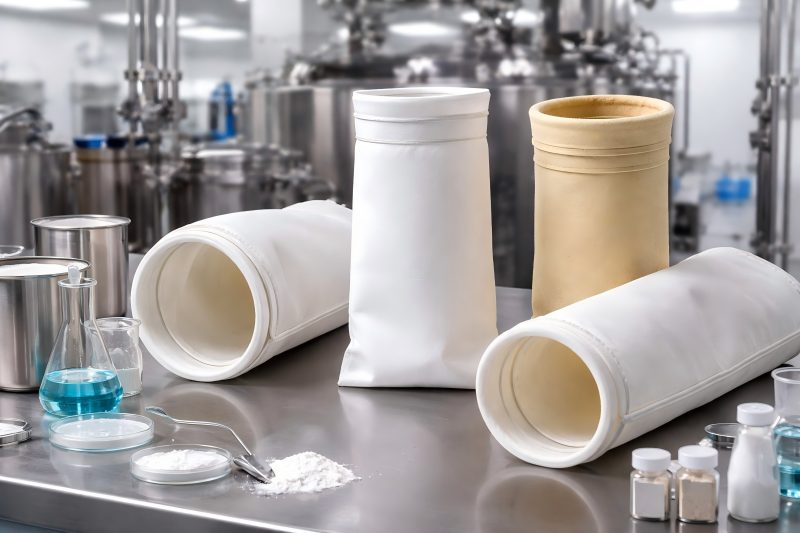
Industrial filter bags are an essential part of the pharmaceutical manufacturing process, where their primary function is to maintain the integrity of the product by filtering out contaminants from the air, liquids, and powders.

Filtration’s Role in Pharmaceutical Manufacturing
Filtration plays a crucial role in pharmaceutical manufacturing, especially in the production of fine powders, active pharmaceutical ingredients (APIs), excipients, and even in the packaging of finished products. Industrial Filter Bags Control Airborne Particles, Reduce Contamination, and Maintain Material Quality. They are vital in several stages of the manufacturing process, including:
- Powder Handling and Granulation: Dust generated during powder handling can be hazardous to workers and lead to cross-contamination of batches.
- Liquid Filtration: In many pharmaceutical processes, solvents and chemicals need to be purified, requiring precise filtration.
- Air Filtration: Cleanrooms used in the pharmaceutical industry must meet strict air quality standards, which are achieved through effective filtration of particulates.
Types of Industrial Filter Bags Used in Pharmaceutical Manufacturing
Industrial filter bags are available in materials tailored for pharmaceuticals. Some of the most commonly used filter bags include:
Polyester Filter Bags
Polyester is commonly chosen for filter bags because of its well-rounded performance, durability, and cost-effectiveness.
| Pros | Cons |
| High chemical resistance (except in extreme pH environments) | Low performance at extreme temperatures |
| Good temperature tolerance (up to 120°C) | Moisture absorption in humid environments reduces efficiency |
| Cost-effective and widely available | |
| Effective for various particle sizes |
Best For: General pharmaceutical dust collection and liquid filtration.
Polypropylene (PP) Filter Bags
Overview:
Polypropylene is an excellent choice when chemical resistance is critical, making it ideal for pharmaceutical processes involving acidic or basic materials.
| Pros | Cons |
| Excellent resistance to acids, alkalis, and solvents | Limited performance in extremely high temperatures |
| High temperature tolerance (up to 90°C) | Not as durable as advanced materials like PTFE |
| Low cost compared to specialized materials | |
| Resistant to moisture |
Best For: Pharmaceutical applications with chemical-based powders or liquid filtration needs.
2.3. PTFE (Teflon®) Filter Bags
Overview:
PTFE, also known as Teflon, is one of the most advanced materials used for filter bags, offering superior performance in harsh environments.
| Pros | Cons |
| Extremely high temperature tolerance (up to 240°C) | More expensive than other material options available |
| Hydrophobic properties (resistant to moisture) | Requires specific cleaning systems to avoid damage |
| Superior filtration efficiency for fine dust and powders | |
| Non-stick surface for easier cleaning and maintenance |
Best For: Pharmaceutical industries dealing with sticky, oily, or high-temperature materials.
Aramid (Nomex®) Filter Bags
Overview:
Aramid, a synthetic fiber, is well-known for its exceptional heat and flame resistance. It is frequently used in pharmaceutical manufacturing that involves high temperatures.
| Pros | Cons |
| Excellent heat resistance (up to 220°C) | Limited chemical resistance, unsuitable for acidic or alkaline materials |
| High tensile strength and durability | Higher cost compared to polyester and polypropylene |
| Resistance to abrasion |
Best For: Applications involving high-temperature dust collection and filtration in hot environments.
Microfiltration and Membrane Filter Bags
Overview:
These filter bags are designed for highly specialized pharmaceutical applications, where extremely fine filtration is required to capture micron and sub-micron particles.
| Pros | Cons |
| High filtration efficiency | Expensive |
| Available in various pore sizes | Limited durability and cleaning ability |
| Excellent for sterile applications |
Best For: Sterile environments, liquid filtration, and applications involving fine particulate matter.
Filtration Mechanisms and Their Impact on Pharmaceutical Manufacturing
Understanding filtration mechanisms helps select the appropriate material for each application. The primary mechanisms are:
Surface Filtration
In this mechanism, particles are trapped on the surface of the filter media. Commonly used for applications involving larger particle sizes.
Best For: Air filtration and general dust collection in pharmaceutical plants.
Depth Filtration
Particles are trapped inside the filter media’s depth. This mechanism is more effective for fine powders and particles, as it allows the bag to trap more dust before it needs to be cleaned.
Best For: Pharmaceutical applications involving fine or small particles, such as APIs or powders.
Cake Filtration
Cake filtration happens when dust forms a layer on the filter. This creates an additional barrier, which enhances the filtration process but also increases the pressure drop.
Best For: Processes involving dry powder filtration in dusty environments.
Compliance with Regulatory Standards
Pharmaceutical manufacturing follows strict regulations, including Good Manufacturing Practice (GMP). Filtration systems, including the use of industrial filter bags, must comply with these regulations to ensure product quality and safety.
The following table outlines how filter bags contribute to regulatory compliance:
| Regulation | How Filter Bags Help | Example of Application |
| GMP | Ensures consistent air quality and dust control | Cleanrooms for drug packaging and API production |
| FDA | Materials used must not contaminate pharmaceutical products | Use of PTFE membranes in sterile drug processing |
| ISO 14644 | Requires controlled environments with low particulate matter | Air filtration in pharmaceutical cleanrooms |
| OSHA | Protects worker health from inhalation hazards | Dust collection during API synthesis to prevent exposure |
Performance Factors in Pharmaceutical Applications
Filtration Efficiency
Filtration efficiency is essential for pharmaceutical manufacturing as it ensures the capture of harmful or unwanted particles that can contaminate products. Higher filtration efficiency means better particulate matter removal by the bag.
Pressure Drop
Pressure drop is the difference in pressure across the filter bag, affecting energy use and efficiency.Therefore, pharmaceutical facilities aim to select filter bags with low pressure drop and high filtration capacity.
| Bag Type | Pressure Drop | Filtration Efficiency | Best For |
| Polyester | Low | Moderate | General applications |
| PTFE | Low to Medium | High | Sticky or fine powders |
| Aramid | Medium | Moderate | High-temperature environments |
| Polypropylene | Low | Moderate | Chemical applications |
Bag Life and Durability
The lifespan of filter bags is critical in pharmaceutical manufacturing. Bags that need frequent replacement can increase downtime and maintenance costs. Materials like PTFE and Aramid tend to have longer lifespans, making them ideal for high-demand processes.
Benefits of Using Filter Bags in Pharmaceutical Manufacturing
The key benefits of using filter bags in pharmaceutical manufacturing include:
- Prevention of Contamination – Filter bags capture dust particles, preventing contamination of sensitive pharmaceutical products and ensuring compliance with industry standards.
- Worker Safety – Airborne dust in pharma environments poses health risks. Filter bags help maintain a safe working environment by trapping hazardous particles.
- Regulatory Compliance – The use of industrial filter bags helps meet the rigorous standards set by regulatory bodies like the FDA, GMP, and ISO, ensuring the safety and quality of pharmaceutical products.
- Operational Efficiency – With proper filtration, pharmaceutical plants can maintain continuous production, minimize downtime, and reduce the frequency of filter bag replacement.
Filter Bag Maintenance and Cleaning Tips
Regular maintenance of filter bags ensures optimal performance and longevity. Some best practices include:
- Regular Inspection: Inspect filter bags for tears, wear, and clogging, particularly in high-dust environments.
- Scheduled Cleaning: Clean bags as per the manufacturer’s guidelines to ensure efficient filtration and prevent clogging.
- Bag Replacement: Replace bags that have reached the end of their service life to prevent filter system failure and contamination.
Conclusion
Industrial filter bags play an indispensable role in maintaining the integrity, safety, and compliance of pharmaceutical manufacturing operations. Choosing the right type of filter bag is crucial to achieving high filtration efficiency, minimizing downtime, and ensuring product quality. By understanding the various types of filter bags available, their features, and how they contribute to operational success, pharmaceutical manufacturers can make informed decisions that benefit both their production process and the end consumers.