
Welded filter bags generally reduce seam-related fiber contamination because they eliminate sewing threads and needle penetrations at bonded joints. This construction can benefit liquid filtration processes with strict foreign-fiber control requirements.
However, total fiber release also depends on filter media, surface finishing, manufacturing quality, operating conditions, and handling. Buyers should evaluate the complete bag rather than seam construction alone.
How Are Welded and Sewn Filter Bags Constructed?
Sewn filter bags use industrial stitching to connect filter media along the side seams and bottom. Sewing threads hold the material sections together and provide the required structural connection.
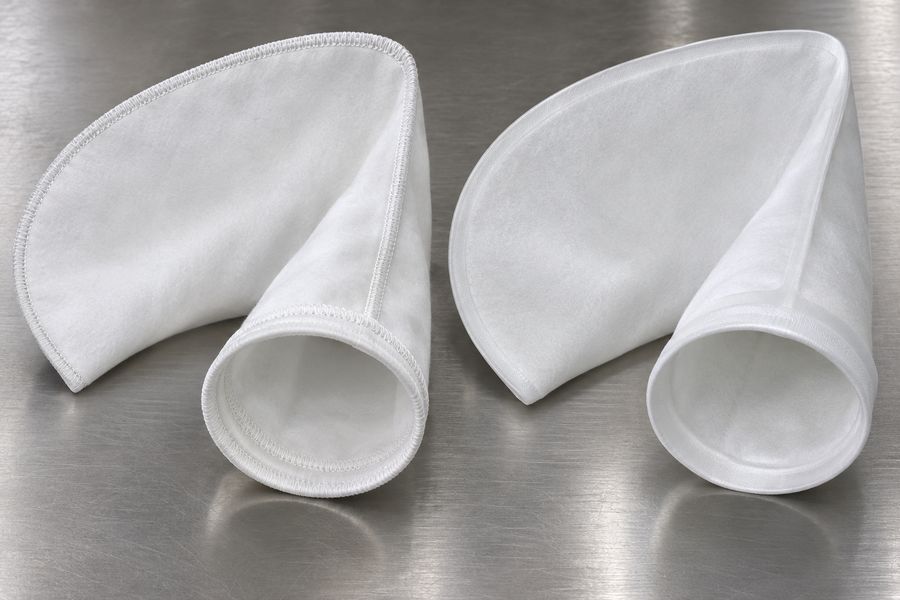
Inspect where the stitching starts and finishes. Unsecured thread tails or poorly covered fabric edges can release material, while broken stitches may weaken the joint.
Poor finishing can leave fibers or thread fragments that may enter the filtered liquid during handling or operation.
Nevertheless, properly manufactured sewn bags remain suitable for many industrial applications. Their performance depends on thread selection, stitch configuration, material compatibility, and the loads experienced during service.
Welded filter bags join compatible thermoplastic media through heat welding or another suitable bonding process. The process creates bonded joints without requiring sewing threads or needle penetrations along those edges.
Manufacturers must control temperature, pressure, contact conditions, and bonding consistency. Insufficient bonding can leave gaps, while excessive thermal exposure may damage the surrounding filter material.
Fully welded construction can reduce exposed seam fibers and eliminate thread-related contamination at the bonded joints. However, the selected media must support the joining process without losing its required filtration properties.
Where Does Fiber Contamination Come From?
In sewn bags, thread ends and damaged stitching can become potential sources of foreign fibers. Repeated handling, installation stress, and pressure fluctuations may contribute to seam deterioration.
Needle penetrations also create openings through the filter material. Although properly constructed seams can provide reliable service, poorly controlled stitching may allow liquid to bypass the intended filtration surface.
Thread selection matters because the sewing material must remain compatible with the process liquid and operating temperature. Weak, deteriorated, or improperly secured threads can increase the risk of contamination.
Filter media themselves can release fibers regardless of whether the bag is sewn or welded. Surface condition, manufacturing residues, abrasion, and material deterioration all influence potential fiber migration.
Surface finishing can help control loose fibers. Singeing removes protruding surface fibers, while calendering uses controlled heat and pressure to modify the media surface and improve its uniformity.
These treatments may reduce potential fiber migration, but they do not guarantee zero shedding. Buyers should consider the finished media condition alongside the bag’s joining method.
Incomplete welding, damaged stitching, and torn filter media can create openings through which unfiltered liquid passes. This is seam bypass, not necessarily fiber shedding.
External particles may also enter the filtration system through upstream piping, storage vessels, installation tools, or improperly handled replacement bags. Changing seam construction cannot resolve every contamination source.
For troubleshooting, operators should determine whether observed material consists of textile fibers, sewing threads, process particles, or other foreign matter. Correct identification prevents unnecessary changes to the filter bag specification.
Welded vs Sewn Filter Bags: Which Performs Better?
| Comparison Factor | Welded Filter Bags | Sewn Filter Bags |
| Joining method | Thermal or suitable material bonding | Mechanical stitching |
| Sewing threads | Not required at welded joints | Required |
| Needle penetrations | Avoided at bonded joints | Present along stitched seams |
| Thread contamination | Lower potential | Requires thread and seam control |
| Media fiber shedding | Depends on media quality and finishing | Depends on media quality and finishing |
| Seam integrity | Depends on bonding consistency | Depends on stitching quality |
| Inspection focus | Bond continuity and edge condition | Stitch consistency and thread condition |
Another important consideration is the distinction between contamination and filtration efficiency. A bag may retain the required particle size while still releasing fibers from its surface or seams.
Both constructions must withstand the differential pressure, temperature, chemical exposure, and handling conditions expected during service. Their potential failure modes differ, but neither is immune to damage.
Welded seams may separate when bonding is incomplete or thermal processing damages the media. Sewn seams may develop broken stitches, loose threads, or localized damage around needle penetrations.
Mechanical strength should be assessed through appropriate seam and finished-bag verification. Buyers should avoid selecting a construction based solely on assumptions about welding or stitching strength.
Which Liquid Filtration Applications Benefit from Welded Filter Bags?
Welded bags are worth considering when contamination originating from sewing threads must be minimized. Media cleanliness, filtration rating, and manufacturing inspection remain equally important selection factors.
Liquid filtration in these industries requires careful attention to material suitability and contamination control. Buyers should verify applicable material requirements, documentation, traceability, and manufacturing controls.
Welded construction can remove sewing threads from bonded seams, but this alone does not establish sterility, food-contact compliance, or pharmaceutical suitability. Every material and manufacturing process must meet the applicable requirements.
General industrial processes may have less restrictive foreign-fiber requirements. Properly manufactured sewn bags can remain practical when their materials, seams, and operating performance meet the application specification.
For abrasive liquids, chemically aggressive fluids, or demanding operating conditions, media compatibility and mechanical integrity may matter more than the joining method alone.
How to Choose and Inspect the Right Filter Bag Construction
Understanding liquid filter bag constructions and their material characteristics helps engineers identify suitable contamination-control options. The selected bag must also fit the operating requirements of the bag filter housings used in the filtration system.
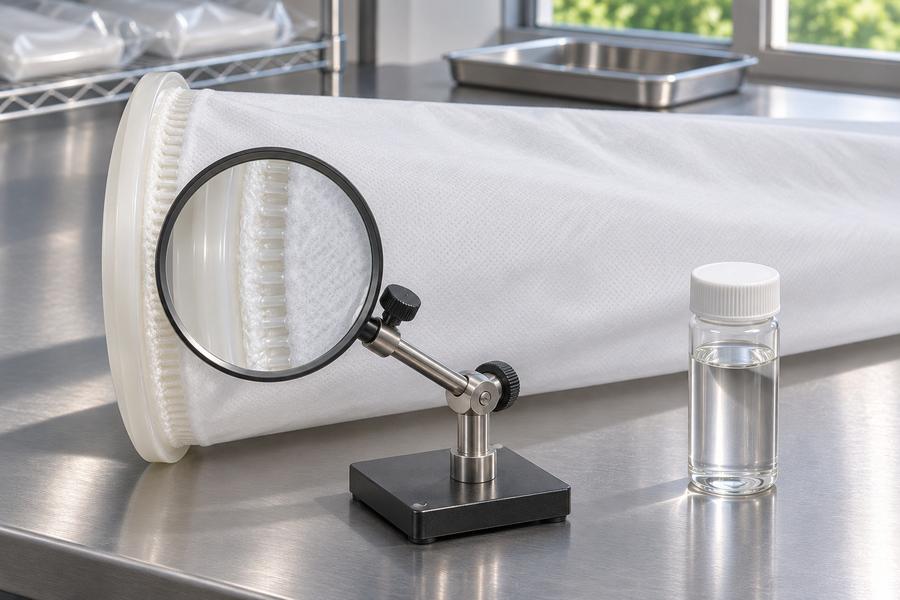
First, identify whether the main concern is sewing-thread contamination, media fiber shedding, or particle breakthrough caused by seam defects. These problems require different preventive measures.
Determine the downstream process requirements and establish appropriate acceptance criteria. Where visible inspection is insufficient, agree on suitable sampling and analytical methods before production approval.
Buyers should also clarify whether contamination limits apply to the filter bag itself or the complete filtration system. This distinction helps prevent disputes when external sources contribute to observed contamination.
Polypropylene and polyester needle felt and woven mesh offer different structural characteristics. Selection should consider particle retention, liquid compatibility, temperature, and the required mechanical performance.
For welded bags, confirm that the selected media supports the proposed bonding process. For sewn bags, check thread compatibility and whether the seam design provides sufficient integrity under expected operating conditions.
Incoming inspection should cover more than the visible joining method. The collar, attachment points, media surface, and finished edges can all influence contamination and operating reliability.
| Inspection Item | Verification Focus |
| Filter media | Material type and liquid compatibility |
| Surface condition | Loose fibers and manufacturing residues |
| Welded seams | Bond continuity and visible separation |
| Sewn seams | Stitch consistency and secured thread ends |
| Collar attachment | Secure connection and proper housing fit |
| Operating suitability | Temperature, chemicals, and differential pressure |
| Quality documentation | Agreed inspection and acceptance records |
Request samples and relevant manufacturing documentation before approving bulk production. Inspection requirements should specify acceptable seam conditions, material identification, and any required contamination checks.
Troubleshooting Fiber Contamination in Liquid Filtration
When fibers appear in filtered liquid, replacing sewn bags with welded alternatives may help, but only if sewing-related contamination is the actual cause.
A structured investigation is more effective than changing components without identifying the source.
If contamination continues after changing construction, examine the filter media first. Loose surface fibers, abrasion, and material degradation can remain potential sources regardless of seam design.
Inspect upstream piping, storage vessels, pumps, and installation equipment for other sources of foreign material. Review whether the liquid chemistry and operating temperature are suitable for the selected media.
Inspect the bag surface, side seams, bottom, and collar for damage. Broken stitches, loose threads, incomplete bonding, and torn media can indicate different failure mechanisms.
Review differential pressure records and operating history to identify possible mechanical stress. Compare contamination findings with bag installation dates and replacement records to determine when the problem first appeared.
If the material consists of particles rather than textile fibers, investigate upstream contamination and possible seam bypass. Confirming the material’s origin is essential before revising the filter bag specification.
Establish consistent handling procedures to prevent bags from contacting sharp edges, dirty surfaces, or contaminated equipment during installation. Operators should also follow the specified replacement and inspection procedures.
For a purchasing trial, request welded and sewn samples made from the same media type, filtration rating, and surface finish. This helps isolate construction-related differences instead of comparing unrelated bag specifications.
Install the samples under comparable process conditions and record the initial liquid cleanliness, operating differential pressure, service duration, and any visible bag damage.
Use an agreed sampling method to assess foreign-fiber contamination before and after filtration.
Ask the supplier to document the media material, surface treatment, seam configuration, and inspection results for each sample.
Approve the construction that meets the established cleanliness and operating criteria, then incorporate those requirements into the purchase specification.