
Reducing filter press cycle time requires consistent feed solids, effective conditioning, clear drainage paths, and carefully controlled operating stages. Faster operation must still deliver acceptable cake dryness and filtrate quality.
Measure a complete cycle before changing settings, including filling, filtration, discharge, and necessary cleaning. Evaluate each adjustment against dry-solids throughput, cake solids content, and filtrate quality under representative feed conditions.
Measure the Complete Cycle Before Making Changes
Start timing when slurry filling begins and stop when the next filling cycle begins. Include filtration, any optional treatment, plate opening, cake discharge, and necessary cleaning.
Record stage durations across several representative cycles. Separate routine operations from unusual stoppages so an isolated maintenance incident does not distort the production baseline.
| Measurement | How to Record It | Why It Matters |
| Complete cycle | Time between successive filling starts | Captures all production stages |
| Feed solids | Representative inlet sample | Reveals changing incoming load |
| Filling and filtration | Separate stage durations, flow and feed pressure | Locates hydraulic delays |
| Cake solids | Dry-solids fraction of discharged cake | Checks final dryness |
| Dry-solids throughput | Cake dry-solids mass per complete-cycle hour | Measures useful output |
| Filtrate quality | Suspended solids or turbidity | Detects separation deterioration |
| Discharge and cleaning | Time per complete cycle | Exposes handling delays |
Keep sampling methods consistent. Where several chambers or batches vary, use representative cake sampling rather than judging the entire press by its driest-looking portion.
Measure discharged wet cake mass and laboratory solids fraction together. Their product provides the dry-solids mass needed to compare genuinely productive cycles.
1. Keep Feed Solids Concentration Consistent
Control Changes Before the Feed Pump
Slurry concentration influences how quickly chambers fill and how resistance develops as solids accumulate. Unstable feed makes apparently identical operating settings produce different cycle times.
Check tank mixing, solids settling, upstream thickening, and unintended dilution. Collect samples at relevant points in the feeding period, not solely when a tank is first mixed.
If feed composition changes between batches, compare each trial with a suitably matched baseline. Otherwise, a favorable result may reflect easier sludge rather than better press operation.
Check Cake Formation, Not Just Feed Flow
Log feed concentration alongside delivered slurry volume, filling duration, and discharged cake mass. Look for steadier chamber loading and fewer incomplete cakes across repeated cycles.
Adding water to improve pumpability may increase liquid requiring removal. Assess any dilution against complete-cycle throughput and final cake quality before adopting it.
Note whether feed temperature or particle characteristics changed during testing, because either can complicate the interpretation of concentration trends.
2. Improve Sludge Conditioning Through Controlled Trials
Test Conditioning Under Representative Conditions
Appropriate conditioning can change particle aggregation, filtration resistance, and cake release. Its usefulness depends on sludge composition and how the reagent is mixed into the feed.
Compare candidate treatments using representative samples. Record reagent type, dosage, mixing intensity, contact time, and the condition of the sludge entering the press.
Begin with controlled small-scale trials where feasible, then verify promising settings on the operating press. Laboratory drainage behavior alone cannot establish full-cycle performance.
Balance Filtration Gains Against Side Effects
Overconditioning may increase chemical consumption or worsen filtrate clarity without shortening a complete cycle. Excessive mixing can also alter floc structure before filtration begins.
For each qualified setting, measure filtration duration, cake solids, filtrate quality, and reagent consumption. Retain only changes that meet the site’s acceptance requirements.
Include any extra conditioning or mixing time in the overall evaluation if that activity delays the next press filling cycle.
3. Maintain Filter Cloth Permeability and Drainage Efficiency
Distinguish Cloth Blinding From Cake Resistance
As deposits accumulate within cloth pores, filtrate encounters additional resistance. Restricted plate drainage channels or blocked outlets can produce similar symptoms even when cloth surfaces appear clean.
Inspect cloths for embedded fines, scaling, tears, poor seating, and damaged seams. Check drainage paths separately so cleaning the cloth does not conceal an unresolved blockage.
Compare flow and pressure trends under matched feed conditions. A deteriorating trend supports investigation, but does not identify the restriction without physical inspection.
Restore Flow Without Compromising Sealing
Use cleaning methods appropriate to the cloth material and deposit chemistry. Replace damaged or persistently blinded cloth when cleaning no longer restores acceptable filtration performance.
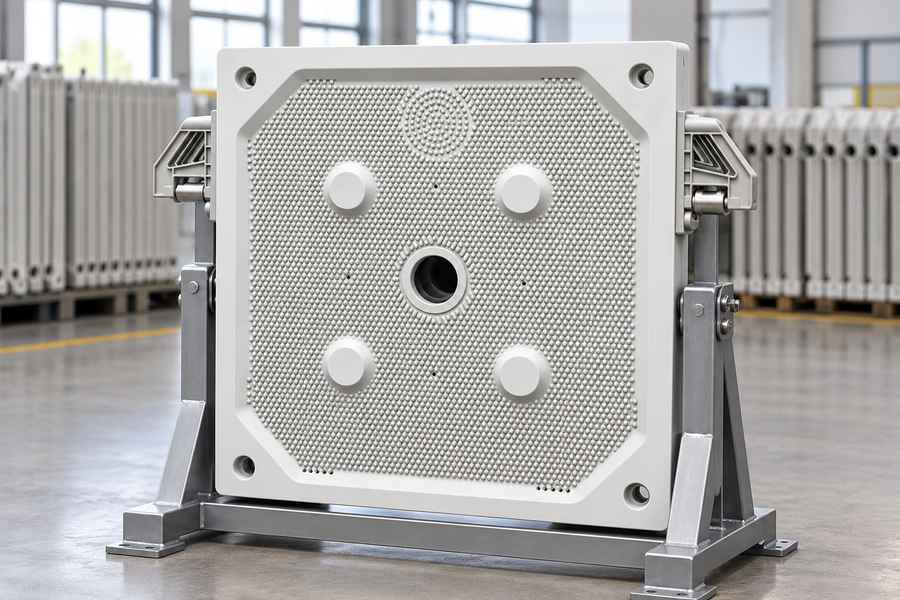
For specific plate-sealing arrangements, rubber edge-coated filter press cloth may be relevant; confirm compatibility with the actual plate, slurry, and sealing requirements before specifying it.
Measure restored flow together with filtrate clarity. Higher flow obtained through damaged fabric or poor sealing is not a successful cycle-time improvement.
4. Adjust Feed Flow and Pressure During Chamber Filling
Match Delivery to Developing Resistance
Early filling and later cake buildup place different demands on the feed system. Where controls permit, test a staged delivery profile rather than relying on one unsuitable setting.
A practical trial may begin with a flow-controlled stage and transition as resistance rises. The appropriate sequence depends on pump capability, instrumentation, and approved press limits.
Log slurry feed pressure and flow throughout filling. Do not confuse feed-line pressure with the hydraulic pressure used to close and hold the plates.
Confirm Chambers Fill Properly
Watch for uneven cake thickness, incomplete chamber filling, and unstable pumping. Faster initial delivery has limited value if the resulting cake requires extra treatment or handling.
Keep changes within documented equipment limits, and inspect the resulting cakes before accepting a revised profile. Avoid applying pressure or timing values from unrelated sludges.
Review pump control response and pipework capacity before testing transitions, particularly where rapid changes could disturb slurry delivery.
5. Determine the Filtration Endpoint From Measurements
Examine the Value of Additional Filtration
Filtrate flow generally declines as resistance increases, but the shape of that decline depends on sludge and cake properties. A fixed timer may miss meaningful process changes.
Record filtrate flow, feed pressure, stage duration, and cake solids at alternative endpoints. Compare the additional liquid removed against the extra time consumed.
A low flow rate alone does not prove that the cake meets dryness requirements. Cross-check endpoint signals against representative cake measurements and the specified filtrate quality.
Avoid Both Premature and Late Discharge
Stopping too early can leave wet centers or uneven cakes. Waiting after further dewatering becomes marginal can reduce dry-solids output over a complete operating period.
Choose the endpoint using repeated trials with comparable feed conditions. Include subsequent discharge time, since a wetter, stickier cake may eliminate apparent filtration-stage savings.
6. Optimize Squeeze and Air Stages Only When Equipped
Assess Membrane Squeezing Separately
Membrane squeezing applies to properly equipped membrane presses, not conventional chamber presses without that function. Compare cake dryness before and after squeezing at qualified operating conditions.
Test whether additional squeeze duration removes enough liquid to justify its place in the cycle. Follow the installed membrane system’s specific operating and safety limits.
Zonel Filtech supplies chamber and membrane filter presses, with configurations that may include optional automation. Verify the installed configuration before developing an optimization trial.
Qualify Any Air-Assisted Treatment
Air blowing should be evaluated only where suitable hardware and an approved procedure exist. Check compressed-air use, treatment duration, and cake response rather than assuming benefits.
Consider filtrate handling, air containment, and safe depressurization during testing. An optional stage should remain only if its measurable benefit supports the complete-cycle objective.
7. Streamline Cake Discharge and Cleaning Schedules
Remove Avoidable Handling Delays
A fast filtration stage can still produce poor throughput when cake release is slow. Track sticking, incomplete discharge, plate movement, and collection equipment interruptions separately.
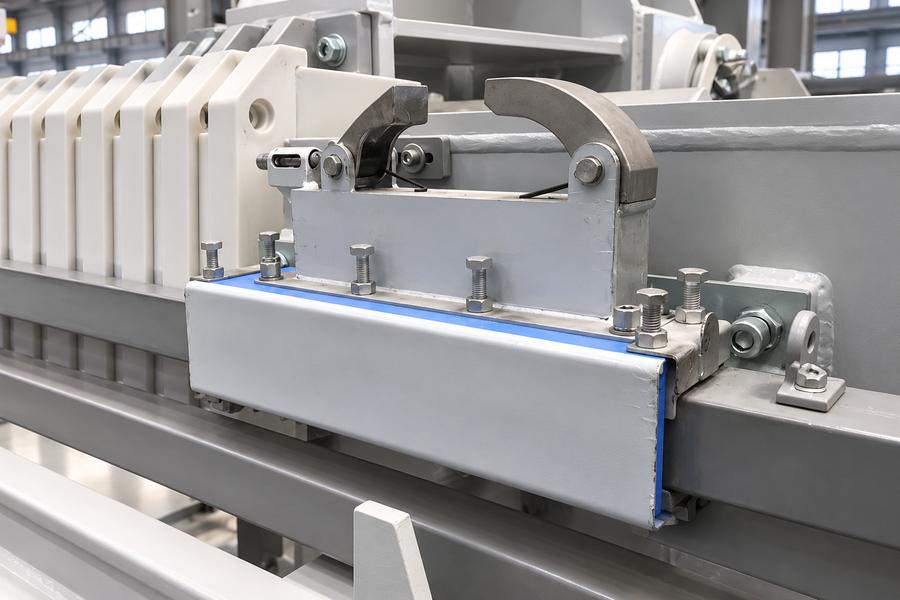
Review discharge chute access and the timing of downstream cake collection. Optional automatic plate shifting can reduce repetitive handling, but does not eliminate supervision or every discharge problem.
Inspect cake release after changes to conditioning or filtration endpoints. A setting that yields acceptable dryness but stubborn deposits may increase the time between fillings.
Schedule Cleaning Around Actual Needs
Distinguish essential between-cycle cleaning from periodic inspection and maintenance. Base cloth washing frequency on observed deposits, declining performance, and applicable operating procedures.
Arrange planned work outside production cycles where feasible. Never shorten discharge through bypassed guards, defeated interlocks, or unsafe access to moving plates and equipment.
Validate Faster Cycles Against Cake and Filtrate Quality
Use a before-and-after trial sheet recording feed conditions, stage times, cake dry-solids mass, cake solids percentage, and filtrate quality for each complete cycle.
Calculate throughput as discharged cake dry-solids mass divided by total cycle hours. Use measured mass and solids concentration; do not substitute wet cake tonnage for dry solids.
Assess the results against application-defined acceptance criteria:
- Productivity: Confirm that dry-solids throughput improves across representative complete cycles, not merely that one filtration stage finishes sooner.
- Cake quality: Check average solids content and variation between chamber locations; investigate wet centers or isolated poorly formed cakes.
- Filtrate quality: Verify that suspended solids or turbidity remain acceptable throughout the cycle, including after process adjustments.
- Reliability: Record chemical consumption, cleaning demand, interventions, and recurring delays before approving routine operation.
Repeat promising trials when feed characteristics vary within the normal operating range. Keep approved settings and supporting measurements available for operators and future process reviews.
Reject apparent gains when lower cake solids or poorer filtrate quality shift the burden to downstream treatment, disposal, or reprocessing.