
Air slide hose and traditional cement unloading hose are both important in cement transportation, but they serve different purposes.
An air slide hose is designed for air-assisted powder fluidization. It improves cement flow, reduces clogging, and supports efficient unloading from trailers, tankers, and silos. A traditional cement unloading hose is designed for direct material transfer. It must withstand pressure, abrasion, bending, and tough site conditions.
For cement trailer operators and bulk powder handling companies, the best choice depends on the unloading system. In many cases, using both hoses correctly can improve unloading speed, reduce downtime, and extend equipment service life.
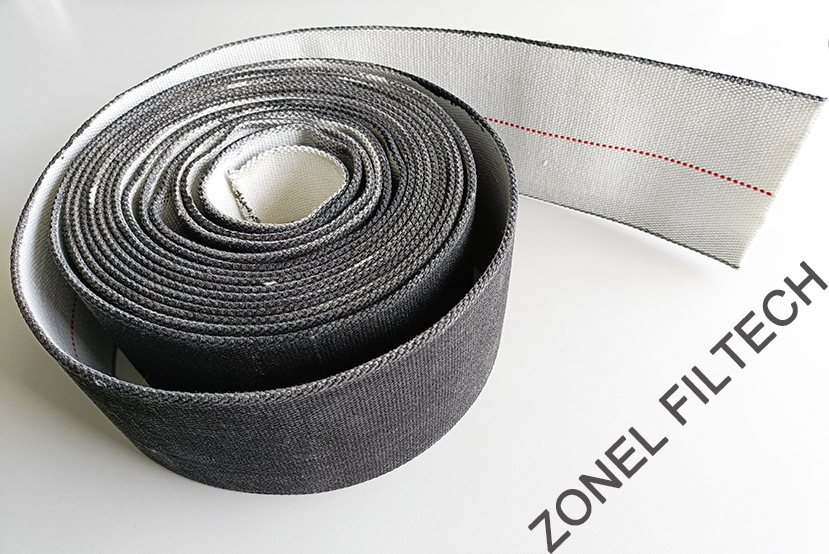
What Is an Air Slide Hose?
An air slide hose is a permeable fabric hose used in pneumatic conveying and fluidization systems. It allows compressed air to pass through the hose wall or fabric layer while supporting cement powder movement. The air creates a fluidized layer under the cement, reducing friction and helping powder flow smoothly.
Air slide hoses are commonly used in:
- Cement trailers
- Bulk powder tankers
- Cement silo systems
- Fly ash conveying systems
- Lime powder unloading
- Powder material fluidization equipment
Instead of simply carrying cement like a normal hose, the air slide hose helps “aerate” the powder and make it flow more easily.
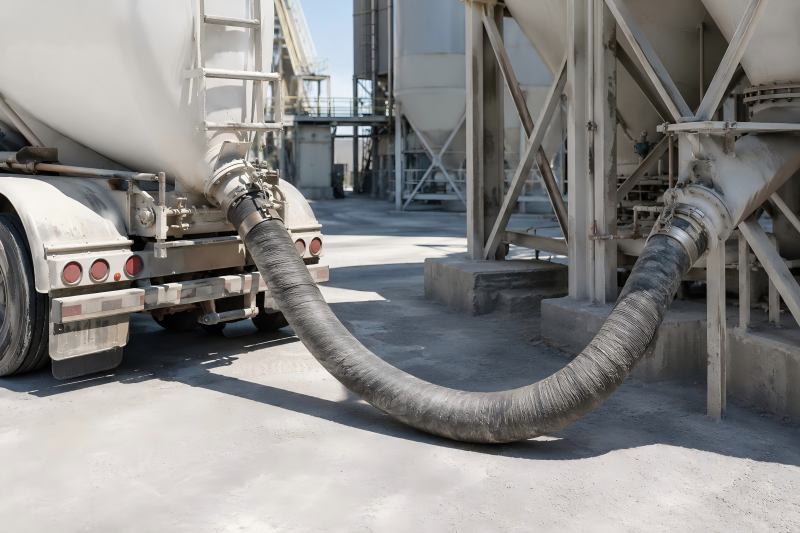
What Is a Traditional Cement Unloading Hose?
A traditional cement unloading hose is usually a rubber or composite hose used to transfer cement powder from a truck, trailer, or silo system to another storage point. It is designed mainly for material discharge and connection.
This type of hose normally focuses on:
- Abrasion resistance
- Pressure resistance
- Flexibility
- Connection between trailer and silo
- External durability
It is suitable for direct material transfer, but it does not provide the same air-permeable fluidization function as an air slide hose.
Quick Comparison Table
| Item | Air Slide Hose | Traditional Cement Unloading Hose |
| Main Function | Fluidizes cement powder with air | Transfers cement powder directly |
| Working Principle | Air passes through permeable fabric | Cement moves through hose under pressure |
| Material Structure | Air-permeable fabric layers | Rubber, PVC, composite, or reinforced layers |
| Best Use | Powder aeration and smooth flow | Discharge connection and material transfer |
| Flow Support | Helps reduce clogging | Depends mainly on pressure and hose design |
| Abrasion Focus | Moderate, depending on design | High abrasion resistance is important |
| Common Application | Inside tanker fluidization system | External unloading line |
Working Principle
The biggest difference between an air slide hose and a traditional cement unloading hose is the working principle.
An air slide hose uses compressed air to support powder movement. When air passes through the permeable hose material, it mixes with the cement powder and creates a fluidized condition. This reduces internal friction and allows cement to move more smoothly.
A traditional unloading hose works more like a transfer channel. Cement powder is pushed through the hose by air pressure or gravity-assisted discharge. The hose itself does not fluidize the material. If the cement is damp, compacted, or poorly aerated, unloading may become slower or less stable.
Structural Design
Air slide hoses are usually made with woven fabric or special synthetic materials that allow air permeability. The key feature is not only strength but also controlled air flow. The hose must allow enough air to pass through while preventing cement powder from leaking excessively.
Traditional cement unloading hoses usually have a more rugged structure. They often include rubber layers, reinforcement fabric, steel wire, or wear-resistant linings. Their design focuses on pressure resistance, bending performance, and long service life during external unloading.
| Structure Feature | Air Slide Hose | Traditional Cement Unloading Hose |
| Air Permeability | Required | Not required |
| Reinforcement | Fabric-based support | Textile or steel wire reinforcement |
| Inner Surface | Designed for powder fluidization | Designed for abrasion resistance |
| Flexibility | Usually flexible but application-specific | Flexible for truck-to-silo connection |
| Sealing Requirement | Must balance air flow and powder retention | Must prevent leakage under pressure |
Cement Flow Performance
Air slide hose provides better support for smooth cement flow, especially when powder needs to move evenly inside a trailer or silo system. By introducing air into the cement bed, it helps prevent material bridging, compaction, and uneven discharge.
Traditional cement unloading hose can also achieve fast unloading, but its performance depends more on air compressor power, hose diameter, pressure, routing, and material condition. If the hose is too long, sharply bent, or worn inside, unloading resistance increases.
For high-efficiency cement trailer unloading, air slide hose often plays an important role before the cement reaches the external discharge hose.
Clogging Risk
Cement powder can easily become compacted, especially after long-distance transportation or exposure to moisture. Poor fluidization may lead to slow discharge, material residue, or complete blockage.
Air slide hose helps reduce clogging by improving powder aeration. It keeps cement particles more mobile and easier to discharge.
Traditional cement unloading hose does not actively loosen the powder. If cement enters the hose unevenly or in dense lumps, blockage may occur more easily, especially at bends, couplings, or narrow sections.
Installation Position
Air slide hoses are often installed inside or near the fluidization area of cement trailers and silos. Their job is to improve internal powder flow before final unloading.
Traditional cement unloading hoses are usually installed outside the tanker or trailer. They connect the discharge outlet to the receiving silo, pipeline, or storage equipment.
In many cement unloading systems, the two hoses are not direct competitors. They may work together: the air slide hose supports internal fluidization, while the traditional unloading hose handles external transfer.
Durability and Wear Resistance
Traditional cement unloading hoses usually face stronger abrasion because cement powder moves directly through the hose at high speed. Therefore, wear-resistant rubber or reinforced materials are very important.
Air slide hose also needs durability, but its wear conditions are different. It must resist cement dust, air pressure, repeated vibration, and long-term powder contact. Its air permeability must remain stable over time. If the fabric becomes blocked, hardened, or damaged, fluidization performance will decline.
Maintenance Requirements
Air slide hose maintenance focuses on checking air permeability, fabric damage, clogging, and installation tightness. If the hose surface is blocked by wet cement or dust buildup, airflow may become uneven.
Traditional cement unloading hose maintenance focuses on wear, cracks, leakage, coupling damage, and pressure resistance. Operators should check the hose regularly for soft spots, exposed reinforcement, deformation, or loose connections.
| Maintenance Point | Air Slide Hose | Traditional Cement Unloading Hose |
| Check Air Flow | Very important | Not applicable |
| Check Abrasion | Important | Very important |
| Check Cracks | Important | Very important |
| Check Couplings | Application dependent | Very important |
| Clean Cement Buildup | Important | Important |
| Replace When | Air permeability drops or fabric breaks | Inner liner wears, leaks, or pressure safety declines |
Cost Considerations
The purchase cost depends on material, size, pressure rating, temperature resistance, and customization requirements.
Traditional cement unloading hoses may have higher costs when they need heavy-duty reinforcement, high abrasion resistance, and large diameters. Air slide hoses may cost more when they require special fabric, stable permeability, and precise system matching.
However, a lower upfront price does not always mean better long-term value. A low-quality air slide hose can reduce unloading efficiency, while a poor unloading hose can cause leakage, safety risks, and downtime.
The right choice should consider total operating cost, including unloading speed, maintenance frequency, replacement cycle, and equipment protection.
Which Hose Should You Choose?
Choose air slide hose when your main need is:
- Better cement powder fluidization
- Smoother discharge from tanker or silo
- Reduced material residue
- Lower clogging risk
- Stable air distribution in powder systems
Choose traditional cement unloading hose when your main need is:
- External cement transfer
- Strong abrasion resistance
- Flexible connection between truck and silo
- Pressure-resistant discharge
- Heavy-duty site operation
For cement trailers, both hose types may be required. The air slide hose improves powder flow inside the system, while the unloading hose transfers the cement to the final storage point.