
Verify a replacement liquid filter bag at the sealing interface, not only by its nominal diameter and length. Compare the bag ring, housing seat, retaining arrangement, support basket, and closure requirements against the actual equipment, then confirm performance in a controlled trial. A bag can appear to fit while leaving a path that allows liquid to bypass the filtration media.
What Does Seal Fit Actually Include?
Seal fit is the combined relationship between the bag, the housing, and the method that holds the bag in place. It includes geometry, material behavior, surface condition, and assembly. A matching size label describes only part of that relationship.
Begin with the housing identification and the latest approved drawing or parts information. Record the original bag specification and any previous modifications to the equipment. A housing that has been repaired or fitted with a different basket may no longer match an old purchasing description.
Zonel Filtech’s liquid filtration range includes different element and housing arrangements. State the specific housing connection and sealing design in an inquiry rather than requesting a universal replacement. Photographs are useful supporting evidence, but they do not replace controlled dimensions.
Which Dimensions Need an Agreed Reference?
Measure the features that locate and seal the bag, using an approved method and suitable tools. Identify the reference surfaces on both the ring and housing seat. Measurements taken across flexible or distorted features can differ substantially depending on how the part is supported.
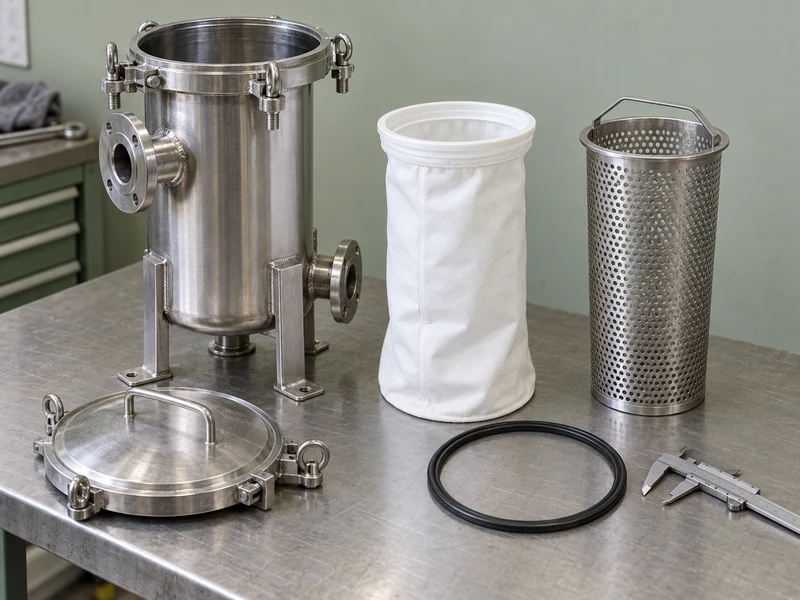
Useful checks may include ring outside dimensions, sealing lip geometry, seat depth, retaining clearance, and the relationship between bag length and basket depth. The relevant tolerances must come from the actual design. Do not create a universal tolerance from a convenient caliper reading on one used bag.
The site’s industrial filter bag size guide explains nominal sizing considerations. This verification goes further by asking whether the complete interface produces the intended seal. The same nominal size can still involve different ring constructions.
Why Is a Used Bag an Imperfect Master Sample?
A used bag can show how the assembly behaved in service, but it may no longer represent its original dimensions. Temperature, chemical exposure, mechanical loading, and removal can alter the ring or fabric. Treat it as evidence of service history rather than an unquestionable manufacturing reference.
Compare an unused approved part when one is available. Record whether the sample came from the same revision and supplier lot as the installed population. If only a used part exists, identify the uncertainty explicitly and seek the original design information.
Preserve visible wear patterns before cleaning or dismantling the sample further. Marks may indicate where contact occurred, although they do not independently prove a continuous seal. Keep photographs linked to the part and service record so that observations are not separated from their context.
What Should Be Checked on the Housing Side?
Inspect the seating surface, support basket, retaining components, and closure arrangement under the site’s isolation and decontamination procedure. Look for damage, deposits, distortion, or incorrectly fitted parts. A replacement bag cannot compensate reliably for a damaged sealing surface.
Confirm that the basket is the intended component and sits correctly. An incorrect basket can change the support and location of the bag even when the housing lid closes normally. Closure effort alone is not a reliable indicator of proper bag seating.
Any additional gasket or retaining component must follow the equipment specification. Adding improvised packing to make a loose ring feel tight can change the load path and create another failure mechanism. Resolve the dimensional mismatch with the supplier instead.
| Interface Feature | Evidence to Record | Reason |
| Bag ring and sealing lip | Drawing reference and measured dimensions | Confirms the intended contact geometry |
| Housing seat | Condition and relevant dimensions | Identifies damage or an incompatible interface |
| Support basket | Part identity, depth, and seating | Checks support and element location |
| Retaining arrangement | Approved parts and assembly method | Confirms how the seal is maintained |
Can Material Compatibility Change the Seal?
Yes, because the ring or seal material can respond to the process liquid and temperature differently from the filtration fabric. A fabric compatibility statement does not automatically qualify every component. Include welded regions, adhesives where present, and any elastomer in the evaluation.
Ask the supplier which material grades are used and what evidence supports the intended exposure. A short immersion check may identify an obvious problem, but it does not establish long-term dimensional stability under load. The qualification plan should reflect the expected service conditions and consequences of leakage.
For high-efficiency filter bags, the sealing arrangement matters because a bypass route can undermine the benefit of finer media. Request interface details alongside the efficiency information. Neither a retention label nor a premium material description removes the need for installation verification.
How Should a Controlled Fit Trial Be Conducted?
Use a documented assembly procedure with trained personnel and the correct equipment state. Record the part identities, orientation, seating observations, and any unusual resistance during assembly. Do not force the lid closed to overcome an unexplained mismatch.
Where authorized by the equipment manufacturer, use an appropriate nonhazardous test medium to check the complete assembly before exposure to the process liquid. The test method, pressure, duration, and acceptance criterion must suit the design. This is not an instruction to pressure-test an unspecified vessel using improvised equipment.
A housing leak check and a filtration bypass check answer different questions. An externally dry vessel may still allow liquid around the internal bag seal. The test plan must therefore specify whether it is assessing external containment, internal separation, or both.
How Can Bypass Be Distinguished from Media Performance?
Combine installation evidence with representative upstream and downstream quality results. An unexpected particle result may arise from sampling, media retention, a damaged bag, or a bypass route. No single pressure reading identifies all of those possibilities.
If a controlled comparison is appropriate, keep the fluid, flow, analytical method, and bag grade consistent while investigating the interface. Changing to a finer grade at the same time makes the result harder to interpret. Preserve the suspect bag for inspection when the operating procedure allows it.
The site’s explanation of nominal and absolute ratings helps separate a media claim from an installed-system result. A passing interface check does not certify the media’s retention efficiency, and a media certificate does not certify the housing interface.

How Should Incoming Lots Be Accepted?
Define which dimensions and construction features are critical, then agree on an inspection plan with the supplier. Sampling should reflect lot size, failure consequences, and the characteristics being checked. A fixed habit of examining one convenient bag from every delivery may not provide the intended assurance.
The NIST introduction to acceptance sampling distinguishes lot acceptance from estimating overall lot quality. That distinction is useful when designing receiving checks. A sampled lot decision does not mean every unexamined bag has been individually verified.
Separate drawing compliance from the process trial. Receiving inspection can confirm that a new lot resembles the approved construction, while a qualification trial establishes whether that construction works for the application. Both records should refer to the same revision.
What Should Trigger Requalification?
Review the interface when the ring material, dimensions, seam construction, housing component, or operating conditions change. A supplier part number that remains unchanged is not enough if the underlying construction has changed. Include change notification expectations in the purchasing agreement.
Also investigate repeated installation difficulty or a new pattern of downstream contamination. These observations may signal wear, variation, or an undocumented modification. Avoid normalizing extra force or improvised adjustments as routine installation technique.
The site’s comparison of size #1 and size #2 filter bags is useful when discussing capacity and physical format. Seal qualification should remain a separate record because a size comparison cannot resolve interface-specific tolerances.
How Can Assembly Variation Be Evaluated?
After the initial fit check, consider whether different trained operators can reproduce the approved assembly without undocumented adjustments. Record the sequence and any positioning feature that is easy to misinterpret. Repeatability matters because a successful installation performed only by one specialist may not represent routine maintenance.
If the procedure depends on a particular tool, retaining component, or orientation mark, include it in the maintenance package. Make the requirement visible before the next changeout begins. A correct spare part still needs a reproducible installation method to deliver consistent sealing.
What Is a Useful Supplier Handover?
Provide the housing identity, interface drawing, approved sample information, relevant fluid conditions, and trial acceptance criteria. Include photographs with scale references where helpful. State which dimensions are controlled requirements and which are provisional observations.
Request a proposed construction that explicitly addresses the sealing interface and support arrangement. Record any difference from the existing design before a production order is released. A clear handover allows Zonel Filtech and the plant team to resolve fit questions before the replacement bags arrive at an operating line.