
Wet filter cakes usually result from inconsistent slurry solids, inadequate conditioning, incomplete chamber filling, blinded filter cloth, restricted drainage, or stopping filtration too early. Several causes can occur together.
The moisture pattern helps narrow the investigation. Comparing uniformly wet cakes, wet centers, and isolated chambers with feed records, filtrate behavior, and measured cake solids provides a practical starting point.
How Can You Recognize Different Wet Cake Patterns?
Uniformly Wet Cakes
When most chambers discharge similarly soft or damp cakes, investigate conditions shared across the press before replacing individual components. Feed characteristics, conditioning, and cycle control are useful starting points.
Check whether the problem began gradually or appeared after a process change. A gradual decline may suggest fouling, while a sudden shift warrants reviewing incoming slurry and operating records.
Wet Centers or Incomplete Cakes
A cake may feel firm near the cloth yet remain soft internally. That pattern differs from a thin, irregular cake produced when the chamber never filled properly.
Record cake thickness and examine freshly discharged cross-sections. Both observations help distinguish incomplete formation from a fully formed cake that has retained internal moisture.
Isolated Wet Chambers
If one chamber repeatedly produces wetter material than its neighbors, mark its plate position and inspect local flow paths. Do not assume every chamber has the same problem.
What Causes Uniformly Wet Filter Cakes?
Changes in Feed Solids and Particle Characteristics
Lower feed solids concentration may require more slurry and more time to build the intended cake. Compare incoming solids measurements with those from satisfactory operating periods.
Particle size also matters. Fine particles can form a tightly packed structure that limits liquid movement, while compressible material may become less permeable as filtration progresses.
Monitor changes in upstream mixing, settling, or production processes. Two batches with similar solids concentrations can behave differently when particle size or composition changes.
Track sampling location and frequency, especially where tanks stratify or slurry settles between batches. An unrepresentative grab sample may obscure the actual feed reaching the press.
Inadequate Sludge Conditioning
For sludges that require chemical conditioning, unsuitable reagent dosage or mixing can leave particles poorly aggregated. The resulting cake may drain slowly and retain excessive liquid.
Excess chemical addition is not necessarily better. Overdosing or damaging formed flocs during mixing can change filtration behavior, so dosage adjustments need controlled testing.
Conditioning is not required for every slurry. Compare representative samples under documented mixing conditions, then confirm any promising adjustment during actual press operation.
Check whether conditioning changes coincide with shifts in filtrate clarity or cake release. These observations help assess treatment without assuming that clearer filtrate always means drier cake.
Widespread Filter Cloth Blinding
Fine solids, precipitates, and persistent deposits may obstruct the cloth surface or lodge within its structure. Restricted permeability slows filtration even when feed conditions remain relatively stable.
Inspect several cloths rather than relying on the appearance of one plate. Compare clean and used sections, noting deposits, damaged fibers, and uneven flow patterns.
Cleaning should match the cloth material and deposit chemistry. If permeability does not recover, investigate replacement and whether the selected fabric suits the slurry.
Why Are Cake Centers Wet or Chambers Underfilled?
Incomplete Chamber Filling
A press stopped before chambers fill may release thin or irregular cakes, sometimes with missing regions. This is primarily a cake formation problem, not simply poor drying.
Compare cake thickness across the press and review the feed delivery history. Restrictions in the feed path or insufficient delivered slurry may explain repeated underfilling.
Running the feed pump does not demonstrate that every chamber contains a full cake. Confirm that the intended chambers developed adequate cake thickness under the actual feed conditions.
High Resistance Within the Cake
During filtration, solids accumulate against the cloth surfaces and the cake grows inward. As resistance increases, removing liquid from the remaining interior becomes more difficult.
Fine or compressible solids can accentuate this effect. A firm outer layer therefore does not prove that the center reached the required dry solids content.
After discharge, examine whether cake edges and centers formed uniformly across both cloth faces. A firm outer section can hide an interior region that developed unevenly.
Distinguishing the Two Conditions
Cut representative cakes after discharge and compare the surface and center. Measure moisture using a consistent method rather than judging dryness entirely by touch or appearance.
If cakes are incomplete, examine filling and feed distribution first. If thickness is adequate but centers remain wet, investigate resistance, conditioning, and the filtration endpoint.
Why Are Only Certain Chambers Producing Wet Cakes?
Local Cloth Problems
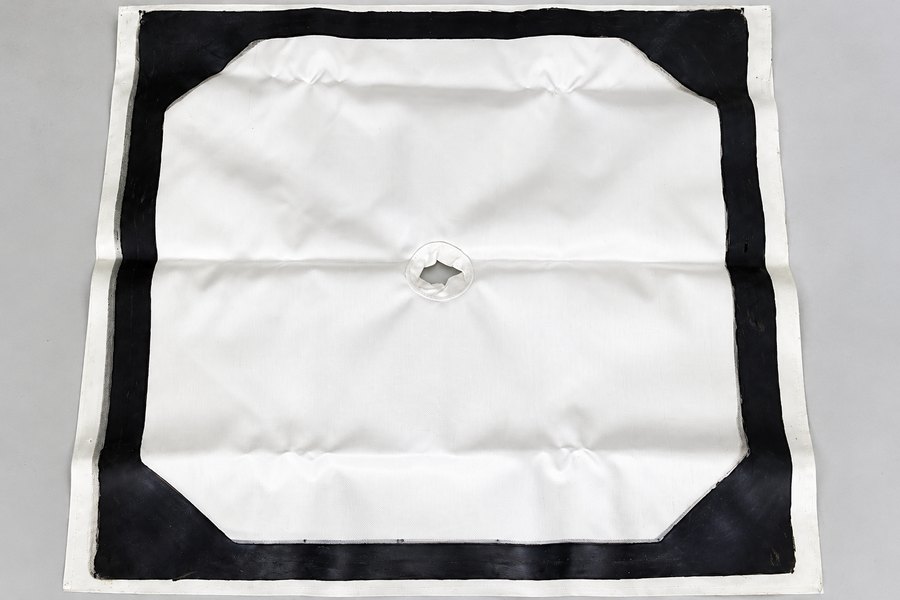
A folded, damaged, incorrectly positioned, or locally blinded cloth can change filtration in one chamber. Compare its installation and condition with neighboring plates before changing process-wide settings.
For certain sealing arrangements, Zonel Filtech describes rubber edge-coated filter press cloth. Its suitability depends on the specific plate design, slurry, and sealing interface; it is not a universal replacement.
Blocked Plate Drainage
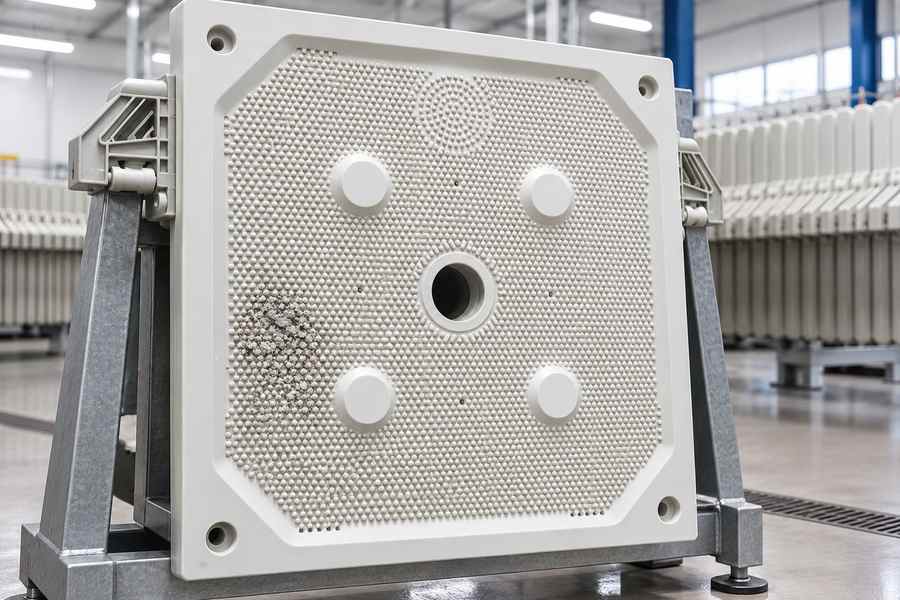
Deposits can obstruct drainage grooves, filtrate ports, or outlet passages. A chamber with restricted discharge may hold more liquid despite otherwise similar feed and cycle conditions.
Inspect affected drainage paths using the equipment’s approved isolation and cleaning procedures. Record obstructions and check for visible plate damage before returning the press to service.
Where outlets can be observed individually, compare discharge behavior between affected and unaffected positions. Differences support further inspection but do not establish a blockage on their own.
Uneven Feed Distribution
Material lodged in feed openings may prevent individual chambers from filling consistently. Compare cake shape and thickness across neighboring plates to identify recurring distribution differences.
Repeated wetness at a fixed position deserves focused inspection. Randomly changing conditions across the press may conceal a localized fault instead of resolving it.
Can Filtration Endpoints or Membrane Squeezing Affect Moisture?
Stopping Filtration Too Early
A fixed timer can end a batch while meaningful drainage continues, particularly when incoming solids or filtration resistance changes. Review filtrate flow and accumulated volume alongside elapsed time.
A falling flow rate alone does not establish that the target dryness has been reached. Conversely, extending a cycle indefinitely can yield little additional liquid once resistance dominates.
Set endpoint criteria using actual cake dry solids, filtrate behavior, and required throughput. Any change should be tested against complete-cycle performance rather than judged by longer filtration time.
Membrane Squeezing Where Installed
Configuration differences matter. Zonel Filtech offers chamber and membrane filter presses, but an additional mechanical squeeze stage applies only to presses equipped for it.
Squeezing may remove further liquid from an adequately formed cake. It cannot reliably compensate for blocked drainage, poor conditioning, or chambers that never filled as intended.
Review squeeze-stage operation against the installed equipment’s approved procedures. Avoid transferring pressure or time settings between different slurries, plates, or press configurations.
How Should Operators Diagnose and Verify the Problem?
Match Symptoms to Checks
Use the following table to select initial inspections. Each observation suggests possibilities, not a confirmed diagnosis; several mechanisms may produce similar cake appearances.
| Observed symptom | Possible cause | Useful check |
| Most cakes remain wet | Changing feed solids or conditioning | Sample feed; compare batch records |
| Slow drainage across the press | Cloth blinding or resistant cake | Inspect cloth; trend filtrate flow |
| Thin or incomplete cakes | Underfilling | Check delivered feed and cake thickness |
| Firm surfaces, wet centers | Internal resistance or early endpoint | Test center and outer cake solids |
| One chamber consistently wetter | Local cloth or drainage restriction | Inspect that cloth and plate passages |
| Uneven thickness by chamber | Feed distribution restriction | Check feed openings and cake profiles |
| Wetter cakes after shorter cycles | Premature endpoint | Compare filtrate trends and endpoint evidence |
| Wet cakes after membrane squeeze | Formation problem or ineffective stage | Verify filling and approved squeeze operation |
Record the Measurements That Matter
- Feed conditions: Measure solids concentration and record temperature, slurry source, and conditioning details when applicable.
- Filtration behavior: Record feed pressure at the press inlet, filtrate flow or volume, and elapsed filtration time.
- Pressure distinction: Slurry feed pressure drives liquid through the cake and cloth; hydraulic closure pressure holds the plates closed. They serve different functions and must not be interchanged.
- Cake condition: Record thickness, sample location, and measured dry solids using the same validated laboratory method.
- Filtrate quality: Check clarity or suspended solids where relevant; a clearer filtrate alone does not establish adequate cake dryness.
Verify Changes Under Comparable Conditions
Change one controllable factor at a time where practical. Document the starting conditions, inspection findings, corrective action, and results so improvements can be attributed with reasonable confidence.
Compare cake dry solids, filtrate quality, and total cycle duration together. Also calculate dry solids processed per complete cycle when assessing whether an adjustment improves useful dewatering output.
Include filling, filtration, discharge, and cleaning time within the cycle boundary. A drier cake is not automatically a better operating result if capacity or filtrate quality deteriorates.
For recurring problems, retain chamber maps, representative cake samples, feed records, and maintenance findings. These records support informed decisions about cloth, plates, endpoint control, and optional automation.