
Define a filter cake washing end point by the required residual impurity in the cake, supported by a validated relationship to the wash filtrate where appropriate. Washing for a fixed time or until the outlet looks clear is not enough to establish product purity. Build the decision around representative samples, measured wash quantity, cake condition, and the actual substance that must be removed.
What Is the Washing Step Intended to Remove?
Identify whether the objective is to displace mother liquor, remove a dissolved impurity, recover a valuable component, or meet a downstream product specification. These objectives can lead to different acceptance measurements. A method that tracks total dissolved ions may not reveal the specific impurity of concern.
Separate washing from dewatering. Dewatering reduces retained liquid, while washing changes the composition of the liquid within the cake and may also affect the solids. A drier cake is not automatically a cleaner cake.
For a project using filter presses, define the washing objective before requesting cycle changes. The press arrangement must support the intended wash route and operating conditions. Confirm the available configuration with the equipment supplier rather than assuming every press supports the same sequence.
Why Can Time Alone Be Misleading?
The amount of wash liquid delivered during a fixed period can change with pressure, cake resistance, temperature, and flow distribution. Two ten-minute washes may therefore expose the cake to different quantities of liquid. Recording time without volume makes the result difficult to compare.
Cake thickness, cracking, and uneven formation can also change how the wash liquid moves. Preferential paths may deliver apparently clean outlet liquid while parts of the cake remain insufficiently washed. An outlet trend needs to be interpreted alongside cake sampling and formation quality.
The American Oil Chemists’ Society discussion of cake washing explains displacement and the effect of dispersion in solvent fractionation. The transferable principle is that ideal displacement is not guaranteed in a real cake. Its application-specific numerical examples should not be used as universal wash requirements for other products.
Which Wash Quantity Should Be Recorded?
Measure the wash liquid delivered and state the basis used to normalize it. Depending on the process, that basis may be dry solids mass, wet cake mass, or an estimated initial liquid volume within the cake. These ratios answer different questions and must not be mixed.
If using a pore-volume wash ratio, document how the initial retained liquid volume was determined. An uncertain estimate can make the ratio appear more precise than it is. For routine operation, a simpler reproducible basis may be preferable if it is demonstrated to predict the required result.
Also record the wash liquid composition and temperature. A change in either can alter impurity removal, product dissolution, or viscosity. A larger wash volume is not automatically better when it increases product loss or creates unnecessary downstream recovery duty.
How Should Wash Filtrate Samples Be Collected?
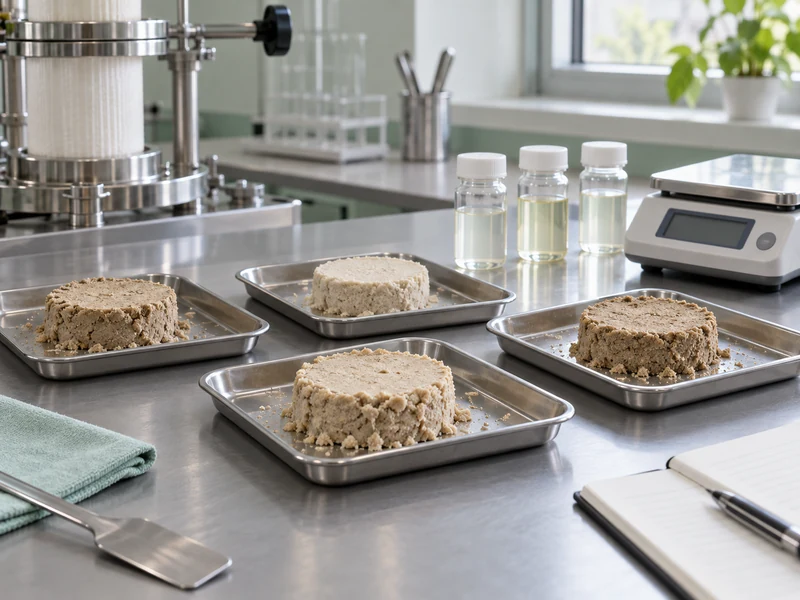
Collect sequential fractions linked to cumulative wash quantity instead of relying only on one final bottle. This reveals how the outlet composition changes through the wash. Keep the initial mother liquor separate in the record so that it is not mistaken for a wash fraction.
Use a collection method suited to the liquid and equipment, following the site’s approved operating procedure. Identify sample location, timing, fraction size, and handling conditions. The same method should be used when comparing candidate wash sequences.
Where multiple outlets or chambers can behave differently, consider how the sample represents that variation. A combined outlet may hide an underperforming region. The need for separate sampling depends on the press arrangement and the consequence of residual impurity.
| Measurement | Purpose | Important Qualification |
| Cumulative wash volume | Defines exposure to wash liquid | Use a consistent normalization basis |
| Sequential filtrate assay | Shows the wash-out trend | Does not automatically represent every cake region |
| Final cake assay | Checks the retained impurity directly | Use representative locations and preparation |
| Product in wash fractions | Identifies yield loss | Separate impurity removal from product dissolution |
When Can Conductivity Be Used as an Indicator?
Conductivity can be useful when the relevant dissolved species produces a reliable, demonstrated relationship with the required impurity result. That relationship must be established for the actual liquid and temperature range. Conductivity responds to the combined ionic environment rather than uniquely identifying one compound.
A changing wash liquid composition can break an earlier correlation. Temperature effects and other dissolved ions can also alter the reading. Use the process-specific assay to verify the relationship before substituting a convenient online indicator for a release measurement.
If conductivity is unsuitable, another analytical method may be needed. The choice should follow the impurity and product specification. Do not select an instrument merely because it provides an immediate number.
How Should the Cake Be Sampled?
Use a sampling plan that represents plausible variation across the cake and, where relevant, between chambers. Record the location and preparation of each sample. A sample from the most accessible edge may not represent the interior.
Agree whether the result is reported on a wet or dry basis and how moisture is measured. A change in retained liquid can alter a wet-basis concentration even when the amount of impurity per unit dry solid is unchanged. The reporting basis should match the acceptance specification.
The site’s explanation of cake filtration in a filter press provides background on cake formation. The washing study should treat formation quality as an input condition because an inconsistent cake can undermine a consistent wash recipe.
How Can a Trial Identify a Practical End Point?
Run a planned series of wash quantities and measure both residual impurity and product loss. Keep cake formation and other influential conditions as consistent as practical. Plot or tabulate the results to identify where additional washing gives limited useful improvement or unacceptable loss.
Consider a hypothetical trial in which an early wash meets the average cake specification but one interior sample fails. The correct conclusion is not that the average proves success. Investigate distribution and sampling before adopting that wash quantity.
A second hypothetical result may show that a longer wash removes more impurity but dissolves too much valuable product. The choice then requires an agreed quality-and-yield tradeoff, or a revised wash method. It is not resolved by maximizing wash duration.
What Role Does the Filter Cloth Play?
The cloth supports cake formation and provides part of the flow path, but it cannot guarantee uniform washing by itself. Fit, sealing, permeability, and condition may influence the cycle. Confirm those factors before attributing every wash problem to chemistry.
Discuss the required cake formation and washing behavior when specifying filter press fabric. Include the liquid, solids, operating conditions, and trial observations. Avoid changing cloth and wash chemistry simultaneously unless the trial is designed to distinguish their effects.
The site’s guide to filter fabric selection mistakes covers the wider material decision. This end-point study uses the selected cloth as a controlled part of the test. Any cloth change should be documented in the wash record.
What Should Routine Production Control Include?
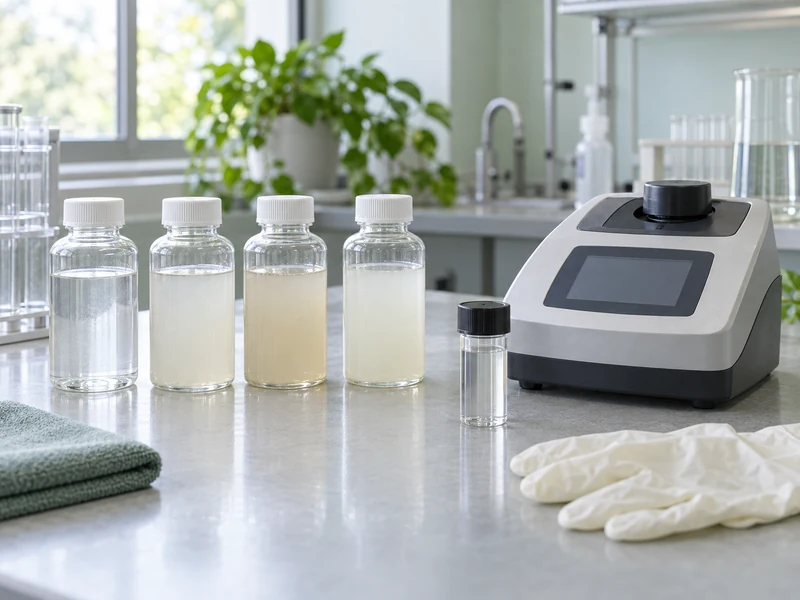
Translate the successful trial into an operating specification with defined input conditions. Include wash liquid identity, allowed quantity range, relevant flow or pressure conditions, and the verification method. State the response when the required indicator is not reached within the approved sequence.
Retain periodic cake checks where an indirect outlet measurement is used. That confirms the relationship remains valid as feed properties or equipment condition change. A proxy that worked during qualification should not be assumed reliable indefinitely.
The site’s filter press operating overview describes broader equipment options. Keep the wash end-point record specific to the tested product and arrangement rather than extending it automatically across every press application.
How Should Recycled Wash Liquid Be Evaluated?
Record the incoming composition of recycled wash liquid and account for variation between batches. A wash sequence qualified with clean liquid may not deliver the same result when the incoming liquid already contains the target impurity. The relevant driving condition has changed even if the delivered volume remains constant.
Test any proposed reuse arrangement against the same final cake criterion and product-loss assessment. Include the effect on downstream recovery or waste handling. Reuse can be valuable, but its benefit should be demonstrated within the complete process rather than inferred from reduced fresh-liquid consumption alone.
What Information Helps a Supplier Improve the Cycle?
Provide the cake formation record, wash-fraction results, final cake assays, product-loss data, and any evidence of uneven distribution. Include the press and cloth configuration. These details help separate a flow-distribution issue from a chemistry or measurement issue.
Ask Zonel Filtech to review the equipment and media aspects within that evidence. Any proposed change should be tested against the same residual-impurity and yield criteria. A measurable end point gives both the plant and supplier a clear basis for deciding whether the revised cycle is better.