Choosing the wrong filter bag may cause short service life, high resistance, dust leakage, frequent bag replacement, or unstable production. For factories handling cement dust, metal dust, wood dust, chemical powder, food powder, welding fume, or high-temperature flue gas, filter bag selection should be based on actual working conditions, not only price.
Table of Contents
ToggleUnderstand Your Dust Type First
The first step is to understand the dust collected by the system. Different dusts have different particle sizes, shapes, moisture levels, abrasiveness, and safety risks.
Fine dust requires higher filtration accuracy. Abrasive dust needs stronger wear resistance. Sticky or oily dust needs better surface treatment. Combustible dust requires special safety design and should be evaluated carefully, because OSHA notes that many materials can become explosible when processed into fine dust and suspended in air.
Common dust types include:
- Cement dust
- Lime powder
- Wood dust
- Flour and food powder
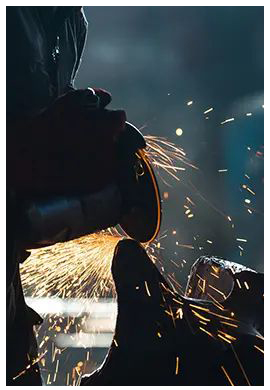
- Metal grinding dust
- Aluminum or magnesium dust
- Chemical powder
- Coal dust
- Plastic powder
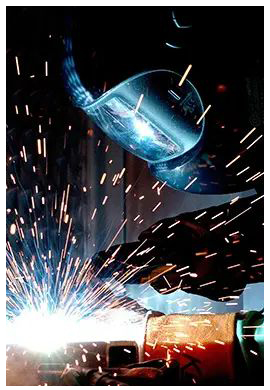
- Welding and cutting fume
For example, cement dust is usually abrasive and alkaline, so the filter bag needs good wear resistance and alkali resistance. Food powder may require food-grade safety, anti-static treatment, and easy dust release. Metal dust may require anti-static or flame-retardant treatment depending on the process.

Temperature Guide for Choosing Filter Bag Materials
Temperature plays a key role in selecting the right filter bag. If the gas temperature is higher than the filter media can handle, the bag may shrink, harden, melt, or lose strength. If the temperature is too close to the dew point, moisture may cause dust caking and corrosion.
Commonly used filter media include polyester, polypropylene, acrylic, aramid, PPS, P84, fiberglass, and PTFE materials. Manufacturer reference data commonly places polyester around 275°F, aramid and PPS around 375°F, and fiberglass/PTFE/P84 in higher-temperature ranges depending on the application and finish.
Common Filter Bag Materials and Applications
| Filter Bag Material | Typical Temperature Resistance | Main Advantages | Common Applications |
| Polyester | Up to around 130°C | Cost-effective, good strength, widely used | Wood dust, cement, general industrial dust |
| Polypropylene | Up to around 90°C | Good chemical resistance, suitable for moisture | Chemical dust, fertilizer, wet dust conditions |
| Acrylic | Up to around 125°C | Good moisture and acid resistance | Asphalt, waste treatment, humid gas |
| PPS | Up to around 190°C | Good acid and alkali resistance, stable at high temperature | Coal-fired boilers, power plants |
| Aramid | Up to around 200°C | High-temperature resistance, strong structure | Cement kilns, asphalt plants, metal processing |
| PTFE | Up to around 250°C | Excellent chemical resistance and low adhesion | Chemical plants, waste incineration, corrosive gas |
| Fiberglass | Up to around 260°C | Very high temperature resistance, low elongation | Cement, steel, high-temperature flue gas |
| Filter Bag Material | Typical Temperature Resistance | Main Advantages | Common Applications |
For most normal-temperature dust collection systems, polyester filter bags are commonly used because they balance cost, strength, and filtration performance. For high-temperature or chemically aggressive gas, PPS, aramid, P84, fiberglass, or PTFE may be more suitable.
Check Chemical Resistance
Industrial dust and exhaust gas may contain acid, alkali, solvent vapor, sulfur compounds, or other corrosive components. The filter bag must resist both the dust and gas environment.
For example:
- Cement and lime dust may be alkaline.
- Chemical powder may be acidic or corrosive.
- Boiler flue gas may contain sulfur and moisture.
- Food powder may require safe and clean filter media.
- Waste incineration gas may require PTFE or PTFE membrane treatment.
If the chemical environment is ignored, the filter bag may age quickly even when the temperature is acceptable. In some applications, chemical attack is a bigger problem than heat.
Consider Abrasion Resistance
Abrasive dust can damage filter bags quickly, especially near the air inlet, cage contact points, and bag bottom. Cement, sand, metal powder, fly ash, and mineral dust are common abrasive materials.
To improve service life, buyers can consider:
- Thicker needle felt
- Higher fabric weight
- Wear cuffs at the bottom
- Reinforced bag mouth
- Better cage surface treatment
- Improved airflow distribution
- Correct inlet design
- Anti-abrasion surface finish
If bags fail mainly at the bottom or near the cage ribs, the problem may not only be material quality. It may also be caused by high inlet velocity, poor cage quality, bag-to-bag collision, or uneven dust loading.

Choose the Right Surface Treatment
Surface treatment can greatly improve filter bag performance. Many industrial filter bags use finishing processes such as singeing, calendaring, heat setting, water-and-oil repellent treatment, anti-static treatment, flame-retardant treatment, or PTFE membrane lamination.
Donaldson lists specialty bag media such as PTFE membrane, aramid, P84, and PPS for harsh conditions, while Camfil also notes that filter media can be specially treated for application-specific needs.
Common Filter Bag Surface Treatments
| Surface Treatment | Main Function | Recommended Use |
| Singeing | Removes loose fibers, improves dust release | General dust, powder processing |
| Calendaring | Creates smoother surface, reduces dust penetration | Fine dust, dry powder |
| Heat Setting | Improves dimensional stability | Medium and high-temperature operation |
| Water & Oil Repellent | Reduces moisture and oil adhesion | Humid, oily, or sticky dust |
| Anti-static Treatment | Reduces static accumulation | Combustible dust, plastic powder, wood dust, flour |
| Flame-retardant Treatment | Improves fire safety performance | Spark risk, hot dust, woodworking |
| PTFE Membrane | Surface filtration, high efficiency, easy cleaning | Fine dust, low emission, sticky dust, high-value dust recovery |
PTFE membrane filter bags are often used when the process requires higher filtration efficiency, lower dust penetration, easier cleaning, and more stable pressure drop. They are usually more expensive, but they can reduce dust emission and maintenance frequency in demanding applications.
Evaluate Air-to-Cloth Ratio
Airflow load per unit area of filter media. If the air-to-cloth ratio is too high, the dust collector may have high pressure drop, poor cleaning, short bag life, and dust re-entrainment.
A lower air-to-cloth ratio usually improves bag life and filtration stability, but it requires more filter area and a larger dust collector.
When selecting filter bags, check:
- Total airflow volume
- Number of bags
- Bag diameter and length
- Total filtration area
- Dust loading concentration
- Cleaning method
- Required emission level
Pulse-jet dust collectors can usually work at a higher air-to-cloth ratio than shaker or reverse-air systems, but the correct value depends on dust type and system design.
Match Filter Bags with Dust Collector Cleaning Method
Different baghouse systems use different cleaning methods. The filter bag structure must match the dust collector design.
Common cleaning methods include:
- Pulse-jet cleaning
- Reverse-air cleaning
- Mechanical shaker cleaning
Pulse-jet filter bags usually work with cages and compressed air pulses. They need good flex resistance and strong bag mouth sealing. Reverse-air bags are often larger and require different top and bottom structures. Shaker bags need enough flexibility to handle mechanical movement.
Filter Bag Selection by Dust Collector Type
| Dust Collector Type | Bag Structure Requirement | Key Selection Points |
| Pulse-Jet Baghouse | Bag with cage, snap band, or top collar | Strong pulse resistance, good cage fit, stable bag mouth seal |
| Reverse-Air Baghouse | Large fabric bags with support rings | Good dimensional stability, low resistance, suitable fabric weight |
| Shaker Baghouse | Flexible bags for mechanical shaking | Good flex resistance, proper tension, durable sewing |
| High-Temperature Baghouse | Heat-resistant media and proper finish | Aramid, PPS, P84, fiberglass, or PTFE depending on gas condition |
| Combustible Dust Collector | Anti-static or conductive design may be needed | Dust testing, grounding, explosion protection, safety review |
A good filter bag must fit the equipment correctly. Even a high-quality filter media can fail early if the size, top style, bottom style, cage fit, or sealing method is wrong.
Pay Attention to Bag Size and Installation Fit
Filter bag dimensions must match the dust collector exactly. Key measurements include:
- Bag diameter
- Bag length
- Top opening size
- Snap band size
- Bottom style
- Cage diameter
- Tube sheet hole size
- Bag-to-cage clearance
If the bag is too tight, it may be difficult to install and may wear quickly against the cage. If it is too loose, it may fold, rub, or clean poorly. Poor sealing at the tube sheet can also cause dust leakage and visible emissions.
Before ordering replacement filter bags, buyers should provide drawings, samples, or accurate measurements.
Consider Moisture and Dew Point
Moisture is a common reason for filter bag failure. When the gas temperature drops below the dew point, condensation may occur inside the baghouse. Moisture can make dust sticky, block filter pores, increase pressure drop, and corrode metal parts.
Common signs of moisture problems include:
- Dust caking on bag surface
- High and unstable pressure drop
- Difficult pulse cleaning
- Wet dust in hopper
- Corrosion inside the collector
- Short bag life
For humid gas conditions, acrylic, PPS, PTFE, or water-repellent treatment may be better than standard polyester. In addition, the system should maintain proper inlet temperature, insulation, hopper heating, and stable operation.
Check Emission Requirements
Some industries require stricter dust emission control, especially cement, metallurgy, chemical, pharmaceutical, food processing, and battery material production. In these cases, standard needle felt may not be enough.
For low-emission requirements, consider:
- PTFE membrane filter bags
- Fine denier fiber media
- Higher fabric weight
- Better surface filtration
- High-quality sewing and sealing
- Proper tube sheet sealing
- Leak detection after installation
If the dust is very fine or valuable, higher filtration efficiency can also improve product recovery.
Do Not Choose Only by Price
Low-cost filter bags may look attractive, but poor material selection can increase total operating cost. A cheap bag that fails quickly may cause more downtime, labor cost, compressed air consumption, product loss, and emission risk.
A better purchasing approach is to compare total cost, including:
- Filter bag price
- Expected service life
- Pressure drop
- Energy consumption
- Replacement frequency
- Downtime cost
- Emission compliance risk
- Maintenance labor
- Dust collector stability
Donaldson notes that high-performance bag filters can improve performance when replacement is caused by excessive pressure drop, which shows why pressure stability and filter life are important cost factors, not only the purchase price.
Practical Selection Checklist
Before choosing industrial dust collector filter bags, collect the following information:
- Dust type and particle size
- Dust concentration
- Gas temperature and peak temperature
- Moisture level
- Acid or alkali content
- Abrasion level
- Combustible dust risk
- Required emission standard
- Dust collector type
- Cleaning method
- Bag size and cage size
- Current bag life and failure reason
- Pressure drop range
- Working hours per day
This information helps suppliers recommend the correct filter media, fabric weight, surface treatment, and structure.
A suitable filter bag does more than collect dust. It helps maintain stable airflow, reduce pressure drop, extend maintenance intervals, protect workers, support environmental compliance, and improve the long-term efficiency of the whole dust collection system.